
Installing an OSB subfloor can quickly become frustrating if you choose the wrong fasteners. Issues like squeaky floors, stripped heads, and time-consuming reloads are common headaches for both DIYers and pros. The right screws make a significant difference in the strength and longevity of your flooring, as well as the speed and ease of installation.
This guide reviews the best screws for OSB subfloor, focusing on collated, decking, and multi-size options. We break down the key strengths of each product, explain what sets them apart, and help you match the right screw to your project needs—whether you prioritize fast installation, corrosion resistance, or versatility.

Top 8 Best Screws For Osb Subfloor
Finding the right Screws For Osb Subfloor isn’t always straightforward. To simplify the process, we compared leading products and shortlisted the ones that truly stand out.
1. Simpson Strong-Tie WSV134S Collated Subfloor Screw
Tackling subfloor projects often leads to tool wear and fatigue, especially with dense OSB panels. Using screws that require less torque can make installation easier and extend the life of your tools.
The Simpson Strong-Tie WSV134S is engineered for easy starts and up to 25% less torque during driving, making it a practical choice for frequent installers or anyone working with tough materials. It's especially well-suited for those seeking a smoother, less strenuous installation process.
- Redesigned tip and thread pattern: Enables easy starts and faster driving, reducing effort
- Deep 6-lobed recessed ribbed head: Ensures clean countersinking and secure bit retention
- Easily backed out: Allows for future access to floor cavities without damaging the subfloor
Compared to standard subfloor screws, this model emphasizes reduced torque and tool preservation. The tradeoff is that it may not offer the same versatility in length or finish as some alternatives.
- Lower installation torque
- Clean countersinking
- Easy to remove if needed
- Reduces tool wear
- Helps prevent floor squeaks
- Limited size options
- Not for all driver types
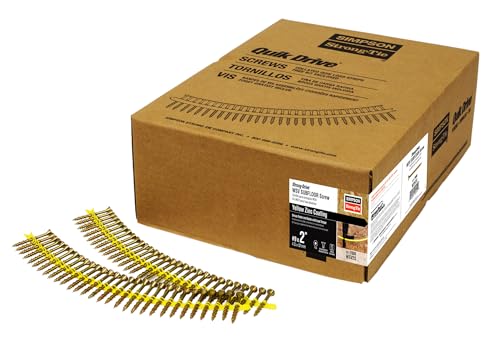
2. Simpson Strong-Tie WSV2S #9 x 2" Collated Subfloor Screw
Floor squeaks are a common frustration with OSB subfloors, often caused by gaps or movement between the joist and panels. Using screws designed to minimize these gaps is key to a quiet, solid floor.
The Simpson Strong-Tie WSV2S #9 x 2" Collated Subfloor Screw is tailored for those who want to eliminate squeaks and ensure a long-lasting, stable subfloor. It's a smart pick for homeowners and pros aiming for a noise-free result.
- Redesigned tip and thread pattern: Promotes easy starts and reduces driving effort
- Deep 6-lobed recessed ribbed head: Improves countersinking and bit retention
- Strong holding power: Effectively reduces gaps that cause squeaks
Unlike general-purpose screws, this model focuses on squeak prevention and ease of removal. The tradeoff is a narrower range of applications outside subfloor work.
- Designed to reduce floor squeaks
- Easy to start and drive
- Clean countersinking
- Strong holding power
- Backs out easily
- Limited to 2-inch length
- Best with compatible drivers
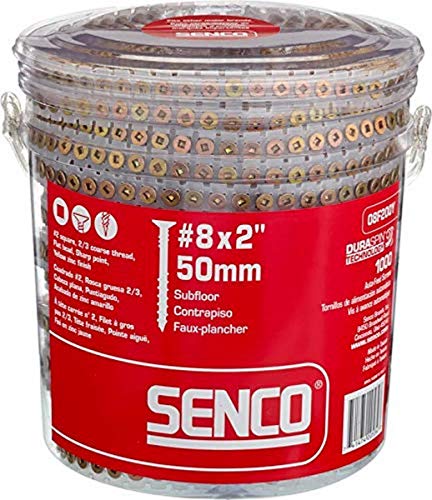
3. Senco Duraspin #8 x 2" Collated Subfloor Screw
Securing OSB subfloors requires screws that deliver reliable holding power and minimize installation hassles. Collated subfloor screws are essential for fast, consistent fastening, especially on large projects where efficiency and reduced fatigue matter.
The Senco Duraspin #8 x 2" Collated Subfloor Screw is a standout for those using collated systems, offering a balance of strength and ease of use. It's ideal for anyone looking to streamline subfloor installation with a trusted, professional-grade fastener.
- 2-inch length: Suitable for most OSB subfloor thicknesses, ensuring proper penetration and secure attachment
- No. 2 square flat head with no. 8 shank: Reduces cam-out and stripping, making installation smoother
- Coarse 2/3 thread with wax, yellow zinc finish: Enhances driveability and provides corrosion resistance for long-term durability
Compared to loose screws or less specialized options, the Senco Duraspin prioritizes compatibility with auto-feed drivers and consistent driving depth. The main tradeoff is that it may not be as versatile for non-collated applications.
- Optimized for collated systems
- Reliable corrosion resistance
- Reduced cam-out risk
- Smooth installation with waxed thread
- Strong holding power
- Not ideal for manual installation
- Limited to 2-inch length
4. GVAKMM #8 x 2'' Subfloor & Decking Collated Screws, 1000 Count

Running out of screws mid-project can disrupt workflow and cause unnecessary delays. Large-count packs in organized buckets help keep big jobs moving smoothly and reduce waste.
GVAKMM #8 x 2'' Subfloor & Decking Collated Screws come in a 1000-count bucket, making them a practical choice for contractors or anyone tackling extensive subfloor or decking work. The anti-rust yellow zinc finish adds durability for both indoor and outdoor use.
- 1000 screws per pack: Reduces the need for frequent restocking
- Anti-rust yellow zinc coating: Protects against weather and chemicals
- Square drive flat head: Prevents stripping and ensures stable installation
Compared to smaller packs, this product prioritizes quantity and organization. The tradeoff is that you may have more than needed for small projects.
- Large 1000-count pack
- Corrosion-resistant coating
- Square drive for stability
- Organized in strips and bucket
- Works for subfloor and decking
- Bulk pack may be excessive for small jobs
- Requires compatible auto-feed driver
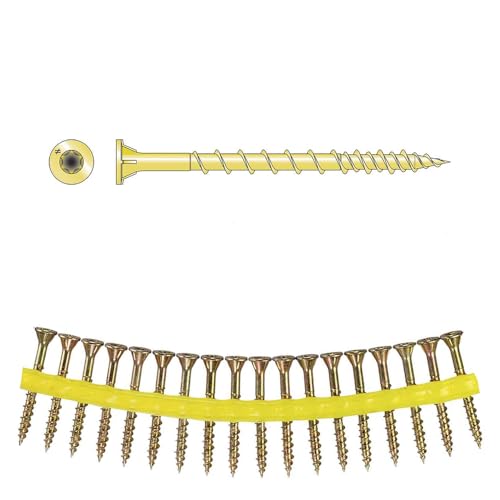
5. Simpson Strong-Tie WSV212S #9 x 2-1/2" Collated Subfloor Screw
Thicker OSB panels or situations requiring deeper penetration call for longer screws to ensure a solid, squeak-free subfloor. Using a longer fastener can provide peace of mind in demanding builds.
The Simpson Strong-Tie WSV212S #9 x 2-1/2" Collated Subfloor Screw is designed for these scenarios, offering extra length and strong holding power. It's a smart pick for professionals working with thick materials or seeking maximum subfloor stability.
- 2-1/2 inch length: Ideal for thick OSB or layered subfloors
- Redesigned tip and thread: Makes starts easy and reduces driving effort
- Deep 6-lobed head: Ensures secure bit retention and clean countersinking
Compared to shorter screws, this model prioritizes holding depth and strength. The tradeoff is that it may be overkill for standard subfloor thicknesses.
- Extra-long 2-1/2 inch size
- Reduces floor squeaks
- Easy to drive and remove
- Strong holding power
- Clean countersinking
- Too long for thin panels
- Requires compatible driver
6. GVAKMM #8 x 1-1/2'' Subfloor & Decking Collated Screws, 1000 Count

Some subfloor or decking projects require shorter screws, especially for thinner materials or where over-penetration is a concern. Having the right length on hand ensures a secure hold without damaging underlying structures.
GVAKMM #8 x 1-1/2'' Subfloor & Decking Collated Screws are tailored for these needs, offering a large pack of shorter screws with corrosion resistance and smooth feeding. They're ideal for contractors and DIYers working on thinner OSB or composite boards.
- 1-1/2 inch length: Prevents over-penetration on thinner subfloors
- Yellow zinc anti-rust finish: Provides long-term durability indoors and out
- Flexible collated strips: Enable jam-free, efficient installation
Compared to standard 2-inch screws, these prioritize compatibility with thinner materials. The tradeoff is reduced suitability for thicker subfloors.
- Shorter length for thin materials
- Corrosion-resistant finish
- Large 1000-count pack
- Smooth auto-feed operation
- Square drive prevents stripping
- Not suitable for thick subfloors
- Requires auto-feed driver
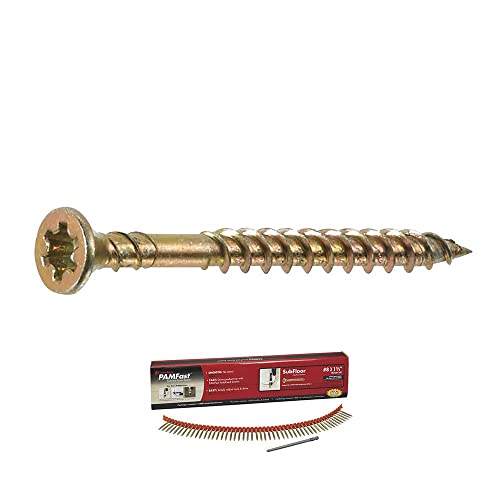
7. Zewool 8 x 2 PAMFast Subfloor Autofeed Screws, 1000 Count
For those using autofeed screw systems, having screws designed specifically for smooth feeding and consistent drive depth is essential. This reduces jams and speeds up installation, especially on large subfloor projects.
Zewool 8 x 2 PAMFast Subfloor Autofeed Screws are tailored for compatibility with autofeed tools, making them a practical choice for contractors and serious DIYers. The 1000-count carton ensures you have enough for substantial jobs.
- Autofeed system ready: Designed for smooth operation with compatible drivers
- 2-inch length: Suits most OSB subfloor installations
- Yellow zinc finish: Provides corrosion resistance for long-term durability
Compared to manual or non-collated options, these screws prioritize efficiency with autofeed systems. The tradeoff is that they may not be as versatile for hand-driving.
- Optimized for autofeed systems
- Large 1000-count carton
- Corrosion-resistant finish
- Consistent drive depth
- Suitable for subfloor projects
- Not ideal for hand-driving
- Limited to 2-inch length
8. 212 Main No.9 x 2 in. T25 Yellow Zinc WSV Subfloor Screws

Sometimes a straightforward, reliable screw is all that's needed for subfloor installation. A basic yellow zinc finish offers corrosion resistance without extra features or complexity.
212 Main No.9 x 2 in. T25 Yellow Zinc WSV Subfloor Screws are a solid choice for those seeking a simple, effective fastener for standard OSB subfloor jobs. They're best for users who want a no-frills solution.
- No. 9 x 2 inch size: Standard fit for most subfloor applications
- T25 drive style: Provides secure engagement with compatible bits
- Yellow zinc finish: Offers basic corrosion resistance
Compared to premium or specialized screws, this option prioritizes simplicity and cost-effectiveness. The tradeoff is fewer advanced features or installation aids.
- Simple and reliable
- Standard 2-inch length
- Corrosion-resistant finish
- T25 drive for secure fit
- No advanced features
- Limited versatility
Buying Guide: How to Choose the Best Screws for OSB Subfloor
Choosing the right screws for OSB subfloor installation is a technical decision that directly affects floor stability, squeak prevention, and installation speed. Buyers must weigh factors like screw length, coating, drive type, and compatibility with autofeed systems. A common misunderstanding is that any wood screw will do, but subfloor-specific fasteners offer real advantages in holding power and long-term durability.
- Collated vs. loose screws: Collated screws speed up installation and reduce fatigue, while loose screws offer more flexibility for small or varied jobs
- Length matters: 2-inch screws are standard for most OSB subfloors, but thicker panels may require 2-1/2 inch screws; shorter screws are best for thin materials
- Coating and corrosion resistance: Yellow zinc and grey coatings protect against rust, especially important for decks or damp environments
- Drive type: Square, T25, and Hexstix drives reduce cam-out and stripping, making installation smoother and more reliable
- Autofeed compatibility: Some screws are designed specifically for autofeed systems, which greatly increase speed on large projects
- Bulk packaging vs. assortment kits: Large-count buckets minimize restocking for big jobs, while assortment kits are best for varied tasks or small repairs
- Common misunderstanding: Not all wood screws are suitable for subfloors—using the wrong type can lead to squeaks, movement, or premature failure
Collated vs. Manual Screw Installation
One of the first decisions is whether to use collated screws with an autofeed system or install screws manually. Collated systems are much faster and reduce fatigue, especially on large jobs, but require compatible tools. Manual installation offers more flexibility for small or irregular projects but is slower and more physically demanding.
- Collated screws: Best for high-volume, repetitive work
- Manual screws: Suitable for small areas or when tool compatibility is an issue
Choosing the Right Length and Size
Screw length is critical for subfloor holding power. Most OSB subfloors work well with 2-inch screws, but thicker or layered panels may need 2-1/2 inch fasteners. Shorter screws are useful for thinner materials or when you want to avoid penetrating into underlying structures.
- 2-inch screws: Standard for most subfloors
- 2-1/2 inch screws: For thicker or double-layered OSB
- 1-1/2 inch screws: For thin panels or overlays
Coating and Corrosion Resistance
Subfloor screws are often exposed to moisture, especially in new construction or outdoor decks. Coatings like yellow zinc or grey corrosion-resistant finishes help prevent rust and extend the life of the fastener. This is especially important for decks or areas prone to dampness.
- Yellow zinc: Common for both indoor and outdoor use
- Grey corrosion-resistant: Often found in multi-size kits for added durability
Drive Type and Bit Compatibility
The drive type affects how easily and securely you can install the screw. Square, T25, and Hexstix drives are designed to minimize stripping and cam-out, which is especially helpful for long runs of screws or when using power drivers.
- Square drive: Reduces stripping and is easy to align
- T25 and Hexstix: Offer secure engagement and compatibility with various bits
Bulk Packs vs. Assortment Kits
Large-count buckets or cartons are best for big projects, minimizing downtime and restocking. Assortment kits provide flexibility for varied tasks but may not be as efficient for large, repetitive installations.
- Bulk packs: Ideal for contractors or large DIY projects
- Assortment kits: Good for small jobs or when multiple sizes are needed
Final Buying Advice
Selecting the right screws for your OSB subfloor project comes down to matching screw type, length, and packaging to your specific needs. Avoid overbuying specialized fasteners for small jobs, and don't underestimate the value of corrosion resistance and drive type for smooth installation.
- Match screw length to subfloor thickness to ensure proper holding power
- Choose collated screws and autofeed systems for large or repetitive installations
- Opt for corrosion-resistant coatings in damp or outdoor environments
- Select the right drive type to reduce stripping and installation errors
- Buy in bulk only if your project size justifies it—otherwise, consider a kit or smaller pack
FAQ For Screws For Osb Subfloor
1. What length screws should I use for OSB subfloor?
2. Are collated screws better than loose screws for subfloor?
3. Is a yellow zinc coating necessary for subfloor screws?
4. Can I use regular wood screws for OSB subfloor?
5. What drive type is best for subfloor screws?
6. How many screws do I need for a typical subfloor project?
Related Posts
- Best Heavy Duty Dolly: Top 8 Picks
- Best Smartlock For Airbnb
- Best Taser For Women S Protection
- Best Budget Multi Process Welder
- Best Filler For 3d Prints
- Best Caulk For Toilet Base: Top 10 Picks
- Best Finish For Outdoor Wood Table
- Best Glue To Bond Metal: Top 8 Picks
- Best Superglue For Plastic: Top 6 Picks
- Top 10 Best Tactical Flashlight For Self Defense
- Best Battery Operated Closet Light: Top 10 Picks
- Best Construction Work Gloves
- Top 9 Best Height For Work Bench
- Best Tub Shower Conversion Costs Options Newark Oh: Top 9 Picks
- Best Sandpaper For Paint Removal: Top 10 Picks
- Top 7 Best Adhesive For Pvc
- Best Single Mode Flashlight
- Best Ventless Garage Heater
- Best Heat Pump Resistance Heating Which Is More Efficient Your: Top 6 Picks
- Top 6 Best Glue For Foam Insulation Board