
Textured ceilings can be challenging to maintain or refresh, especially when standard paint rollers leave uneven results or fail to match existing patterns. Whether you’re repairing damage, blending patches, or updating an entire room, using the wrong roller can make the job harder and the finish less appealing.
This guide reviews the best rollers for textured ceilings, including options for popcorn, crow’s foot, tree bark, and decorative patterns. We’ll help you understand which roller suits your needs, highlight the strengths of each pick, and explain what to look for when tackling DIY ceiling projects at home.


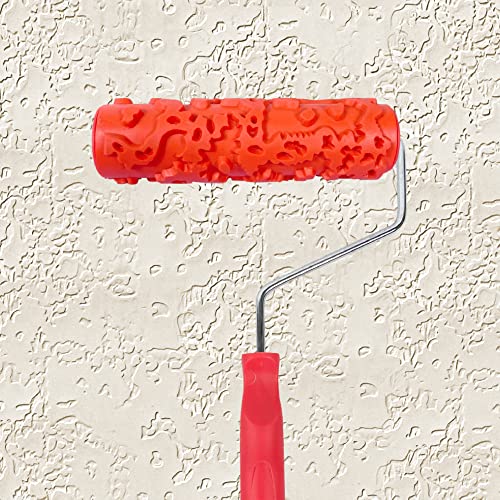
Top 5 Best Roller For Textured Ceiling
By examining product features, customer reviews, and real-world usage, we compared leading Roller For Textured Ceiling products and selected our top picks.
1. Wooster Popcorn Acoustical Roller Cover 9-Inch
Popcorn and acoustical ceilings require a roller that can handle deep, uneven textures without flattening or missing spots. Standard rollers often struggle to provide full coverage, leading to patchy results and extra work.
The Wooster Popcorn Acoustical Roller Cover is designed specifically for these challenging surfaces, making it a reliable choice for homeowners updating older ceilings or tackling repairs. Its thick, multi-slit foam ensures paint reaches into every crevice, making it ideal for those who want consistent results with minimal effort.
- Specialized foam design: Multi-slit orange foam provides gentle yet thorough coverage on uneven textures
- Resistant PVC core: Withstands water and solvents for long-lasting use and easy cleaning
- Compatible with all paints: Works especially well with latex, giving flexibility for different projects
Compared to typical paint rollers, this Wooster model prioritizes coverage and ease of use on popcorn and acoustical surfaces. The tradeoff is that it’s less suitable for creating decorative patterns or use on flat walls.
- Excellent for popcorn ceilings
- Durable PVC core
- Works with all paint types
- Easy to clean
- Gentle on textured surfaces
- Not for decorative patterns
- Limited to ceiling textures
2. Stitokg 9-Inch Crow’s Foot Texture Roller
Achieving a deep, consistent crow’s foot texture can be difficult without the right roller, especially for large ceiling or wall areas. Many rollers fail to deliver sharp, repeatable patterns, making repairs or new applications look uneven.
The Stitokg Crow’s Foot Roller is engineered for clear, defined crow’s foot patterns and is accessible to both DIYers and contractors. Its ergonomic design and reinforced materials make it a strong choice for those seeking professional-looking results without specialized skills.
- Precision-engineered pattern: Creates deep, consistent crow’s foot textures for walls and ceilings
- Heavy-duty construction: Reinforced core and high-density nylon blend resist wear and deformation
- Wide 9-inch coverage: Balances speed and detail, ideal for large projects
Unlike basic foam rollers, this option focuses on pattern clarity and durability, making it stand out for decorative work. The main tradeoff is that it’s best suited for crow’s foot patterns and less versatile for other texture types.
- Sharp crow’s foot texture
- Durable nylon blend
- Easy for beginners
- Fast coverage
- Works with mud or paint
- Single pattern style
- Not ideal for popcorn ceilings
3. Nichiyo 7-Inch Rubber Decorative Texture Roller
Creating custom decorative textures on walls or furniture requires a roller that can imprint clear patterns without smudging or skipping. Many standard rollers are too smooth or inflexible for this type of creative work.
The Nichiyo Rubber Texture Roller is made for DIYers who want to refresh walls, floors, or furniture with unique designs. Its durable rubber construction and negative imprinting technique make it a flexible tool for artistic projects and covering imperfections.
- High-quality rubber: Durable material allows for repeated use and sharp pattern transfer
- Versatile application: Works with texture mediums, plasters, and slow-drying paints
- Multi-surface use: Suitable for walls, floors, furniture, and more
Compared to larger, foam-based rollers, this model prioritizes artistic flexibility and pattern variety. The tradeoff is that results may vary depending on paint type and user technique.
- Great for custom patterns
- Durable rubber build
- Works on multiple surfaces
- Covers wall imperfections
- Suitable for various coatings
- Pattern results may vary
- Narrower than standard rollers
4. Jayen 9-Inch Tree Bark Texture Roller

Matching or creating a tree bark texture on drywall can be challenging with general-purpose rollers, often resulting in uneven or indistinct patterns. A specialized roller is needed for uniform, natural-looking results.
The Jayen Tree Bark Texture Roller is designed for those who want to replicate or repair tree bark effects on walls and ceilings. Its soft foam rubber maintains crisp detail, making it a good fit for both new projects and touch-ups.
- Unique tree bark design: Delivers consistent, natural-looking bark patterns
- Soft foam rubber: Maintains pattern clarity during extended use
- 9-inch width: Efficiently covers large areas for faster completion
Compared to multi-pattern rollers, this option is focused on a single, distinctive look. The tradeoff is reduced versatility for other texture styles.
- Distinct tree bark pattern
- Soft, resilient foam
- Easy to use for DIY
- Good for repairs and new work
- Single pattern only
- Not for flat surfaces
5. Kamrexi 9-Inch Fishtail Pattern Texture Roller
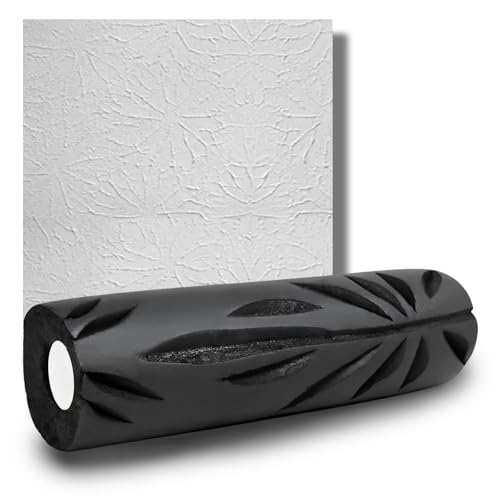
Adding a unique fishtail pattern to walls or ceilings requires a roller that can maintain detail and cover large areas efficiently. Generic rollers often produce inconsistent or blurry results, making decorative work more difficult.
The Kamrexi Fishtail Pattern Roller stands out for its specialized design and durable construction, helping users achieve distinctive, stretched patterns with minimal effort. It’s especially useful for those seeking something different from standard textures.
- Soft elastic foam: Preserves pattern clarity for long-term use
- 9-inch coverage: Handles large surfaces with even texture distribution
- Easy application: Suitable for both DIY and professional projects
Compared to basic rollers, this model emphasizes decorative uniqueness and efficiency. The tradeoff is that its pattern may not blend seamlessly with traditional textures.
- Distinct fishtail pattern
- Durable foam construction
- Efficient large-area coverage
- Beginner-friendly
- Pattern may not suit all rooms
- Less versatile for repairs
Buying Guide: How to Choose the Best Roller for Textured Ceilings
Choosing the right roller for textured ceilings is a technical decision that impacts the quality and ease of your project. Not all rollers are created equal—some are designed for deep popcorn textures, others for decorative patterns like crow’s foot or floral designs. The main tradeoffs involve coverage area, pattern clarity, and ease of use, and buyers often misunderstand which roller suits their specific ceiling type or repair needs.
- Roller types vary by texture: Options include popcorn/acoustical rollers, crow’s foot pattern rollers, tree bark rollers, fishtail rollers, and decorative floral rollers
- Coverage width matters: 9-inch rollers cover large areas efficiently, while smaller rollers offer more control for detail work
- Material impacts durability: Foam, rubber, and PVC cores each offer different levels of resilience and ease of cleaning
- Pattern specificity is key: Some rollers are single-pattern (crow’s foot, tree bark, poinsettia), while others are more versatile for DIY decorative effects
- Intended use affects choice: Rollers for repairs and blending need to match existing textures; decorative rollers are best for new looks
- Paint and mud compatibility: Not all rollers work with both paint and drywall mud—check before buying
- Common misunderstanding: Many buyers assume any roller will work for textured ceilings, but using the wrong type can result in poor coverage or mismatched patterns
Deciding Between Popcorn, Crow’s Foot, and Decorative Rollers
The main difference between these rollers is the type of texture they produce and the surfaces they’re best suited for. Popcorn and acoustical rollers are designed for deep, uneven textures, while crow’s foot and floral rollers create specific decorative patterns. Choose based on whether you’re matching an existing ceiling or creating a new look.
- Popcorn/acoustical rollers: Best for covering or repairing classic textured ceilings
- Crow’s foot and floral rollers: Ideal for adding or matching decorative patterns
- Decorative/art rollers: Suitable for creative DIY projects on walls, floors, or furniture
Coverage Area and Roller Width
Roller width affects both speed and control. Wider rollers (9-inch) are efficient for large rooms or ceilings, while narrower rollers are better for detail work or tight spaces. Consider the size of your project and your comfort working overhead.
- Wider rollers: Faster for big surfaces
- Narrower rollers: More precise for corners and edges
Material and Durability
The build material of a roller influences how long it lasts and how easy it is to clean. Foam and rubber rollers are common for textured work, with PVC or reinforced cores offering added longevity. If you plan to reuse your roller, look for one with durable construction.
Matching Patterns for Repairs
If you’re repairing a section of ceiling or blending patches, it’s important to match the existing texture as closely as possible. Single-pattern rollers (like crow’s foot or poinsettia) are best for this, while multi-purpose rollers may not produce an exact match.
Final Buying Advice
Selecting the right roller comes down to understanding your ceiling’s texture, the size of your project, and your desired finish. Don’t assume one roller fits all needs—choose based on the specific pattern and coverage you require.
- Match roller to ceiling texture for best results
- Choose wider rollers for large areas and faster work
- Opt for durable materials if you plan to reuse the roller
- Select single-pattern rollers for repairs or blending
- Avoid overbuying specialty rollers if you only need basic coverage
FAQ For Roller For Textured Ceiling
1. What type of roller should I use for popcorn ceilings?
2. Can I use a decorative pattern roller for repairs?
3. Are all texture rollers compatible with both paint and drywall mud?
4. How do I clean a textured roller after use?
5. Do I need special skills to use a texture roller?
6. Can I use the same roller for walls and ceilings?
Related Posts
- Best Heavy Duty Dolly: Top 8 Picks
- Best Smartlock For Airbnb
- Best Taser For Women S Protection
- Best Budget Multi Process Welder
- Best Filler For 3d Prints
- Best Caulk For Toilet Base: Top 10 Picks
- Best Finish For Outdoor Wood Table
- Best Glue To Bond Metal: Top 8 Picks
- Best Superglue For Plastic: Top 6 Picks
- Top 10 Best Tactical Flashlight For Self Defense
- Best Battery Operated Closet Light: Top 10 Picks
- Best Construction Work Gloves
- Top 9 Best Height For Work Bench
- Best Tub Shower Conversion Costs Options Newark Oh: Top 9 Picks
- Best Sandpaper For Paint Removal: Top 10 Picks
- Top 7 Best Adhesive For Pvc
- Best Single Mode Flashlight
- Best Ventless Garage Heater
- Best Heat Pump Resistance Heating Which Is More Efficient Your: Top 6 Picks
- Top 6 Best Glue For Foam Insulation Board