
3D prints often reveal layer lines, small gaps, and surface imperfections that can be tough to hide, especially before painting or finishing. Without the right primer, achieving a truly smooth and professional look can be frustrating, even after hours of sanding.
Filler primers are designed to bridge these gaps, making post-processing much easier and more effective. In this guide, we review the best filler primers for 3D prints, comparing their strengths, application methods, and real-world usability. Whether you’re prepping a cosplay prop, a prototype, or a display model, you’ll find the right solution for your workflow.


Top 8 Best Filler Primer For 3d Prints
Finding the right Filler Primer For 3d Prints isn’t always straightforward. To simplify the process, we compared leading products and shortlisted the ones that truly stand out.
1. Rust-Oleum 2-in-1 Filler & Sandable Primer Spray
Surface imperfections and rust can undermine both the appearance and durability of steel projects. Using a sandable primer is essential for achieving a smooth, paint-ready finish and reliable rust resistance.
This Rust-Oleum 2-in-1 Filler & Sandable Primer Spray stands out for its fast-drying formula and easy sanding, making it ideal for car repairs or any project where surface smoothness is critical. It's especially useful for home users who want to quickly prep metal, wood, or fiberglass with minimal downtime.
- Fast drying time: Touch-dry and ready for recoating in just 10 minutes, speeding up project timelines
- Filler and sandable: Fills minor imperfections and sands smooth for a flawless finish
- Versatile application: Suitable for wood, metal, and fiberglass, offering flexibility for various tasks
Compared to standard primers, this formula prioritizes ease of sanding and quick turnaround. The tradeoff is a slightly smaller coverage area per can, so larger projects may require multiple cans.
- Dries quickly
- Easy to sand smooth
- Fills minor imperfections
- Rust-resistant base
- Works on multiple surfaces
- Covers less area per can
- Not for heavy rust removal
2. Rust-Oleum Automotive Filler Primer Spray, 11 oz
Achieving a smooth, uniform surface on 3D prints can be difficult, especially when dealing with larger models or multiple pieces. A filler primer that covers more area per can helps streamline the process and reduces waste.
Rust-Oleum’s Automotive Filler Primer Spray offers excellent coverage and a rust-resistant base, making it a smart option for users who want to maximize value and minimize the number of cans needed. It’s a good fit for those working on bigger projects or frequent print finishing.
- Covers up to 12 sq ft: Efficient for larger prints or batch processing
- Quick 10-minute dry time: Keeps projects moving without long waits
- Flat finish for topcoat adhesion: Ensures paint sticks evenly and smoothly
Compared to other primers, this one emphasizes coverage and efficiency, helping users stretch each can further. The tradeoff is that it doesn’t include sandable properties in the name, so extra sanding effort may be needed for a perfectly smooth finish.
- High coverage per can
- Fast drying formula
- Rust-resistant base
- Good adhesion for topcoats
- Works on wood, metal, fiberglass
- Not labeled as sandable
- Slightly smaller can size
3. JENOLITE Primer Filler Aerosol Paint, White
3D prints can be made from a variety of materials, and not all primers work well across the board. A flexible, multi-surface primer is key for users who print with different plastics or combine materials in their projects.
JENOLITE’s Primer Filler Aerosol Paint in white features a tough acrylic formula that adheres to metal, wood, and plastic, making it a versatile pick for makers and modelers. It’s ideal for those who want a single primer that handles diverse surfaces and is easy to build up for a smooth finish.
- Flexible acrylic formula: Bonds well to plastic, wood, and metal
- Ready for overcoating in 24 hours: Compatible with various paint types
- Buildable for smoothness: Multiple coats fill imperfections for a flawless base
Compared to typical automotive primers, this product focuses on flexibility and compatibility with a range of materials. The tradeoff is a longer drying and curing time before overcoating.
- Works on plastic, wood, metal
- Flexible acrylic formula
- Builds up for smooth finish
- White color for easy coverage
- Made in Britain
- 24-hour overcoat wait
- Requires several coats
4. Vallejo Surface Primer Color, White Acrylic, 60 ml

Fine details and small-scale 3D prints require a primer that applies smoothly without obscuring intricate features. Standard spray primers can sometimes be too heavy for this type of work.
Vallejo’s Surface Primer is specially formulated for airbrushing, making it a top choice for modelers and hobbyists who need precision and control. It’s best suited for those working with miniatures, figures, or prints where detail retention is critical.
- Airbrush-ready acrylic formula: Enables thin, even coats for detailed work
- Quick-drying and hard finish: Protects models without warping or softening
- Available in multiple sizes: Flexible for small or large projects
Unlike aerosol primers, Vallejo’s option prioritizes fine application and detail preservation. The tradeoff is that it requires an airbrush setup and may not fill larger imperfections as effectively.
- Ideal for airbrush use
- Preserves fine details
- Quick drying
- Matte finish
- Multiple bottle sizes
- Requires airbrush equipment
- Not for large surface filling
5. JENOLITE Primer Filler Aerosol Paint, Black

Sometimes a black primer is preferred for specific paint jobs or to help spot surface flaws before final coating. Not all filler primers offer color variety, limiting creative options.
JENOLITE’s Primer Filler Aerosol Paint in black delivers high filling properties and a flexible acrylic formula, making it a solid choice for users who want a dark base or need to prime multiple materials. It’s especially useful for automotive parts, props, or models where a black undercoat is desired.
- Black flexible acrylic primer: Ideal for dark finishes or color-sensitive projects
- Multi-surface compatibility: Bonds to plastic, wood, and metal
- Buildable for smooth results: Multiple coats fill imperfections effectively
Compared to standard gray or white primers, this product offers color flexibility and strong multi-surface performance. The tradeoff is a longer wait before overcoating and the need for several coats for best results.
- Black color for dark base
- Flexible acrylic formula
- Works on various materials
- Fills small imperfections
- Made in Britain
- 24-hour overcoat time
- Requires multiple coats
6. Rust-Oleum 2-Pack Automotive Filler Primer Spray, 11 oz
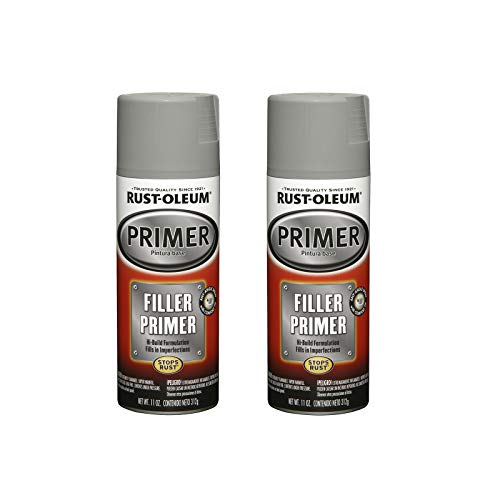
Large or multiple 3D print projects can quickly use up primer, making single cans inconvenient and costly. A multi-pack offers better value and ensures you won’t run out mid-project.
Rust-Oleum’s 2-Pack Automotive Filler Primer Spray is ideal for users who finish several prints at once or want to keep extra primer on hand. It’s a practical option for makerspaces, classrooms, or anyone who works in batches.
- Two 11 oz cans included: More coverage for less frequent reordering
- Any-angle spray technology: Easy to apply on complex shapes
- Fills minor scratches and nicks: Prepares surfaces for painting
Compared to single-can options, this pack prioritizes convenience and value for frequent users. The tradeoff is that it may be more than needed for occasional or small-scale projects.
- Two cans per pack
- Good value for bulk use
- Any-angle spray
- Fills small surface flaws
- Quick drying
- May be excess for small jobs
- Standard gray only
7. Rust-Oleum 6-Pack 2-in-1 Filler & Sandable Primer Spray, 12 oz

For those who regularly finish 3D prints or handle large-scale projects, running out of primer can disrupt workflow. Buying in bulk ensures a steady supply and often reduces overall cost.
Rust-Oleum’s 6-Pack 2-in-1 Filler & Sandable Primer Spray is tailored for makers, educators, or small businesses who need consistent results across many prints. It’s best for environments where primer is used frequently and in larger quantities.
- Six 12 oz cans per pack: Ample supply for ongoing projects
- Fills and sands smooth: Reduces manual finishing time
- Rust-resistant formula: Protects surfaces and improves paint adhesion
Compared to single or double packs, this bulk option prioritizes quantity and convenience. The tradeoff is a higher upfront cost and potential for unused product if needs are sporadic.
- Bulk pack for frequent use
- Fills and sands easily
- Rust protection
- Consistent results
- Saves time on large jobs
- Higher initial investment
- May expire if unused
8. Seymour PBE Professional Primer, Gray Filler
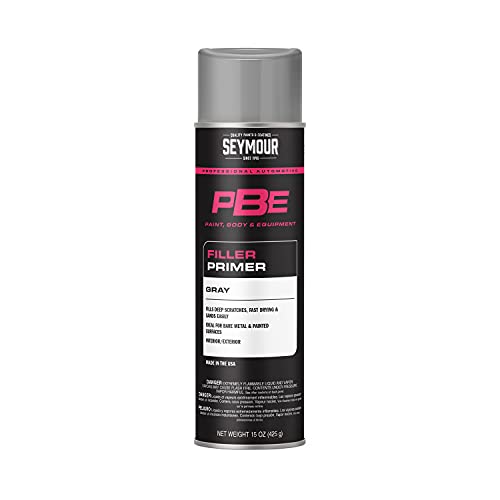
Deep scratches and pronounced surface flaws can be challenging to hide on 3D prints, especially if standard primers aren’t thick enough. A professional-grade filler primer can help minimize these defects for a cleaner finish.
Seymour’s PBE Professional Primer is formulated to address deeper scratches and imperfections, making it a strong choice for users who need a thicker, sandable base. It’s suitable for those working on metal-heavy prints or parts that require extra surface correction.
- Thick, sandable base coat: Fills deeper flaws for smoother results
- Large sprayhead for even coverage: Helps achieve a professional look
- Heat resistant up to 250F: Suitable for parts exposed to higher temperatures
Compared to lighter primers, this product prioritizes filling power and professional application. The tradeoff is that it may be overkill for minor imperfections or delicate prints.
- Fills deeper scratches
- Thick sandable coating
- Fast drying
- Large sprayhead
- Heat resistant
- Best for metal surfaces
- May be too thick for fine detail
Buying Guide: How to Choose the Best Filler Primer for 3D Prints
Filler primers for 3D prints are technical products designed to smooth out layer lines, fill small imperfections, and create a paint-ready surface. Choosing the right one involves balancing ease of use, compatibility with your print material, and the level of surface correction needed. Many buyers assume all primers work the same, but differences in formula, drying time, and application method can significantly impact your results.
- Aerosol vs. Airbrush Primers: Aerosol sprays are convenient for most users and cover large areas quickly, while airbrush primers offer more control for fine details and miniatures.
- Material Compatibility: Not all primers adhere equally to plastic, wood, or metal. Check if the primer is rated for your print material.
- Filling Power: Some primers are designed to fill only minor imperfections, while others can handle deeper scratches or gaps.
- Drying and Curing Time: Fast-drying primers speed up your workflow, but some require longer curing before sanding or painting.
- Color Options: White, gray, and black primers each serve different finishing needs—choose based on your topcoat color or project requirements.
- Bulk vs. Single Packs: Multi-packs offer better value for frequent users, but may not be necessary for occasional projects.
- Common Misunderstandings: Many assume any primer will fill print lines, but only filler primers specifically formulated for this purpose deliver the best results.
Choosing Between Aerosol and Airbrush Primers
Aerosol primers are the most popular for 3D prints due to their ease of use and wide coverage. However, airbrush primers like Vallejo’s are better for small models or when you want to avoid obscuring fine details. If you work mostly with miniatures or intricate prints, consider investing in an airbrush setup for more precision.
Matching Primer to Your Print Material
Not all primers stick well to every type of plastic or mixed-media project. Some, like JENOLITE’s acrylic formula, are designed for broad compatibility with plastics, wood, and metal. If you often switch materials or combine them in your prints, look for a flexible, multi-surface primer.
Deciding on Filling Power and Sandability
If your prints have pronounced layer lines or occasional deep scratches, choose a primer labeled as a filler or sandable. Products like Rust-Oleum’s 2-in-1 or Seymour’s professional primer are best for these cases. For smoother prints or fine models, a standard primer may suffice and preserve more detail.
Considering Color and Finish
White, gray, and black primers each have their place. White is ideal for bright topcoats, black helps spot flaws and suits dark finishes, and gray is a versatile middle ground. Choose a color that complements your final paint job or helps you identify surface issues during prep.
Bulk Packs vs. Single Cans
If you finish prints regularly or work in a shared space, multi-packs like Rust-Oleum’s 2-pack or 6-pack offer better value and convenience. Occasional users may prefer single cans to avoid waste or product expiration.
Final Buying Advice
Selecting the right filler primer comes down to your project size, material, and finishing goals. Don’t assume one type fits all—match the primer to your workflow and print characteristics.
- Assess your print material before choosing a primer to ensure good adhesion
- Decide on aerosol or airbrush based on your typical project size and detail level
- Opt for filler and sandable formulas if you need to hide layer lines or scratches
- Buy in bulk only if you finish prints frequently to avoid waste
- Choose primer color based on your topcoat or inspection needs
FAQ For Filler Primer For 3d Prints
1. What is a filler primer and why use it on 3D prints?
2. Can I use any primer on 3D printed parts?
3. How many coats of filler primer should I apply?
4. Do I need to sand after using a filler primer?
5. How long should I wait before painting over filler primer?
6. Is it better to use a white, gray, or black primer for 3D prints?
Related Posts
- Best Heavy Duty Dolly: Top 8 Picks
- Best Smartlock For Airbnb
- Best Taser For Women S Protection
- Best Budget Multi Process Welder
- Best Filler For 3d Prints
- Best Caulk For Toilet Base: Top 10 Picks
- Best Finish For Outdoor Wood Table
- Best Glue To Bond Metal: Top 8 Picks
- Best Superglue For Plastic: Top 6 Picks
- Top 10 Best Tactical Flashlight For Self Defense
- Best Battery Operated Closet Light: Top 10 Picks
- Best Construction Work Gloves
- Top 9 Best Height For Work Bench
- Best Tub Shower Conversion Costs Options Newark Oh: Top 9 Picks
- Best Sandpaper For Paint Removal: Top 10 Picks
- Top 7 Best Adhesive For Pvc
- Best Single Mode Flashlight
- Best Ventless Garage Heater
- Best Heat Pump Resistance Heating Which Is More Efficient Your: Top 6 Picks
- Top 6 Best Glue For Foam Insulation Board