
Detecting refrigerant leaks in HVAC systems is a critical maintenance task for both professionals and homeowners. Undetected leaks can lead to system inefficiency, environmental harm, and costly repairs, making a reliable leak detector an essential tool for anyone working with air conditioning or refrigeration equipment.
This guide reviews the best HVAC leak detectors available today, highlighting their strengths, technical features, and practical tradeoffs. Whether you need ultra-sensitive detection, long sensor life, or a user-friendly display, you’ll find clear recommendations to help you choose the right tool for your needs.


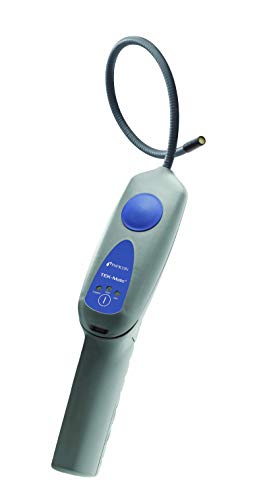
Top 5 Best Hvac Leak Detector
By examining product features, customer reviews, and real-world usage, we compared leading Hvac Leak Detector products and selected our top picks.
1. Fieldpiece DR58 Heated Diode Refrigerant Leak Detector
Refrigerant leaks can be difficult to pinpoint, especially in complex HVAC systems where small leaks can cause major performance issues. A high-sensitivity detector like this ensures even the smallest leaks are found before they become costly problems.
The Fieldpiece DR58 stands out for its ultra-sensitive heated diode sensor, making it ideal for technicians who need to detect micro leaks across all common refrigerants. It's especially well-suited for those who prioritize accuracy and need a tool that can handle demanding environments.
- Heated Diode Sensor: Detects leaks as small as <0.03 oz/yr for early intervention
- IP54 Durability: Resists moisture and oil for reliable use in tough conditions
- Long Battery Life: 18-hour rechargeable battery supports extended fieldwork
Compared to standard detectors, the DR58 prioritizes sensitivity and durability, with a flexible probe for hard-to-reach areas. The tradeoff is a higher upfront investment, but it delivers peace of mind for critical leak detection tasks.
- Detects extremely small leaks
- Works with all refrigerant types
- Long sensor and battery life
- Flexible probe for tight spaces
- Clear LCD and LED indicators
- Higher price point
- May be more advanced than needed for basic tasks
2. SENSYX Rechargeable HVAC Refrigerant Leak Detector
Locating leaks in systems with a wide range of refrigerants can be challenging, particularly as new blends and regulations emerge. A versatile detector reduces the need for multiple tools and simplifies maintenance across different systems.
The SENSYX Rechargeable Leak Detector is designed for users who need broad compatibility and adjustable sensitivity. It's a strong choice for technicians servicing diverse HVAC systems, including those using newer refrigerants and combustible gases.
- Rechargeable Lithium Battery: Cordless use with USB-C charging for convenience
- Wide Detection Range: Identifies CFCs, HCFCs, HFCs, HFOs, and select combustible gases
- Large Color LCD: Clear display with visual leak indicators for user comfort
Unlike many alternatives, this model emphasizes versatility and user-friendly operation. The tradeoff is a slightly larger form factor and a focus on broad detection rather than maximum sensitivity.
- Covers most refrigerant types
- Rechargeable and cordless
- Adjustable sensitivity settings
- Large, easy-to-read display
- UL1484 safety standard compliance
- Bulkier than some compact models
- Not the most sensitive for micro leaks
3. Inficon 705-202-G1 Refrigerant Leak Detector
Technicians often need a leak detector that can withstand frequent transport and rough handling on job sites. Portability and durability are key for those who work in varied environments and need a tool that’s always ready.
The Inficon 705-202-G1 is built for reliability and ease of use, with a proven heated diode sensor and a rugged carrying case. It's ideal for professionals who value a straightforward, portable solution with solid detection capabilities.
- Heated Diode Sensor: Reliable detection of all major refrigerant types
- Automatic Zeroing: Reduces false alarms for accurate leak identification
- Runs on D-Cell Batteries: Easy battery replacement in the field
Compared to rechargeable or feature-rich models, this detector prioritizes ruggedness and simplicity. The main tradeoff is a lower sensitivity threshold and shorter sensor life compared to premium options.
- Durable carrying case included
- Simple battery replacement
- Reliable heated diode sensor
- Automatic background adjustment
- US-based support
- Lower sensitivity than top-tier models
- Shorter sensor life
4. Fieldpiece DR82 Infrared Refrigerant Leak Detector

Frequent sensor replacements can be costly and inconvenient, especially for busy technicians. Choosing a detector with a long-lasting sensor reduces downtime and maintenance expenses over the years.
The Fieldpiece DR82 uses an infrared sensor with a 10-year life, making it a practical choice for those who want a low-maintenance, high-performance tool. It's well-suited for professionals who value longevity and consistent accuracy.
- Infrared Sensor: Up to 10 years of service life for reduced maintenance
- Flexible 17-Inch Probe: Accesses tight and complex spaces with ease
- Backlit LCD and LED Tip: Clear leak visualization in any lighting
While not as sensitive as the DR58, the DR82 offers a strong balance of durability and ease of use. The tradeoff is a slightly higher initial cost for long-term savings.
- Very long sensor lifespan
- Works with all refrigerant types
- Flexible probe design
- Clear visual and audible alerts
- Rechargeable USB-C battery
- Not the most sensitive in class
- Higher upfront cost
5. Elitech Infrared HVAC Refrigerant Leak Detector
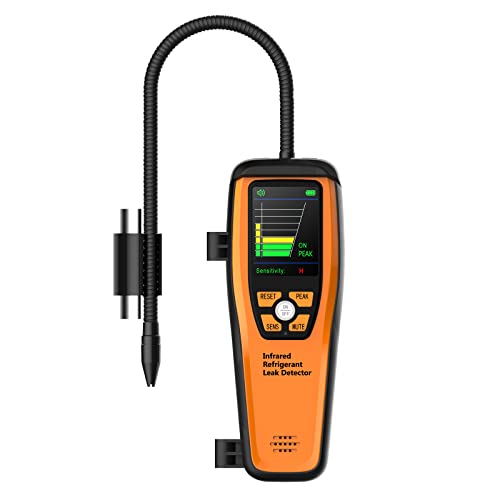
False positives and interference from other substances can make leak detection frustrating and time-consuming. An infrared sensor with strong anti-interference properties helps ensure accurate results in challenging environments.
The Elitech Infrared Leak Detector is designed for users who need reliable detection in areas with potential contaminants. It's a good fit for technicians working in commercial or industrial settings where accuracy is critical.
- Infrared Sensor: Strong resistance to interference for precise detection
- Adjustable Sensitivity: High/Medium/Low settings for different leak sizes
- Large 2.8-Inch Screen: Easy-to-read display for quick leak identification
Compared to traditional heated diode models, this detector prioritizes accuracy in complex environments. The tradeoff is a slightly lower maximum sensitivity and a focus on halogenated gases.
- Excellent anti-interference
- Long sensor service life
- Large, clear display
- Detects all halogenated gases
- US-based support
- Not the most sensitive for micro leaks
- Infrared sensors may cost more to replace
Buying Guide: How to Choose the Best HVAC Leak Detector
HVAC leak detectors are specialized tools designed to identify refrigerant leaks in air conditioning and refrigeration systems. Choosing the right detector involves balancing sensitivity, compatibility, ease of use, and durability. Many buyers are surprised by the range of sensor types and features available, and may overlook important tradeoffs such as sensor lifespan or the types of refrigerants supported.
- Heated Diode vs. Infrared vs. Corona Sensors: Heated diode sensors offer high sensitivity for traditional refrigerants, infrared sensors provide strong anti-interference and long life, and corona sensors are budget-friendly but less sensitive.
- Detection Sensitivity: Higher sensitivity allows for earlier leak detection, but may not be necessary for all users or environments.
- Refrigerant Compatibility: Not all detectors support every refrigerant type, especially newer blends or combustible gases.
- Display and Alerts: Large, clear displays and multiple alert types (visual, audible, LED) improve usability, especially in challenging environments.
- Power Source: Rechargeable batteries offer convenience for frequent use, while replaceable batteries are better for occasional or field use.
- Sensor Lifespan: Longer sensor life reduces maintenance and replacement costs over time.
- Portability and Build Quality: Rugged cases and flexible probes help with fieldwork and tight spaces.
- Common Misunderstandings: Many assume all detectors are equally sensitive or compatible with all refrigerants, which is not the case. Sensor type and detection range matter.
Choosing Between Sensor Technologies
The main decision is between heated diode, infrared, and corona sensor detectors. Heated diode models are favored for their high sensitivity and compatibility with most refrigerants, while infrared detectors excel in environments with potential interference and offer longer sensor life. Corona sensors are best for budget-conscious buyers who need basic leak detection without advanced features.
Matching Detector Features to Your Work Environment
Consider where and how often you'll use your detector. Professionals servicing a variety of HVAC systems may benefit from broad refrigerant compatibility and rechargeable batteries. Homeowners or DIYers can often opt for simpler, more affordable models with basic sensitivity and replaceable batteries.
- Frequent field use: Look for rugged build, long battery life, and flexible probes
- Occasional home use: Simpler models with basic sensitivity and easy controls
- Commercial/industrial settings: Anti-interference and broad compatibility are key
Understanding Sensitivity and Sensor Life
Sensitivity ratings vary widely. Ultra-sensitive detectors are essential for pinpointing micro leaks in critical systems, but may be overkill for routine maintenance. Sensor lifespan also affects long-term value—infrared sensors can last up to 10 years, while others may need more frequent replacement.
Importance of Display and Alert Systems
A clear display and multiple alert types make leak detection more efficient, especially in dim or noisy environments. Color LCDs, bar graphs, and LED tips help quickly identify leak locations and severity.
Final Buying Advice
Selecting the right HVAC leak detector comes down to matching features and sensitivity to your real-world needs. Avoid overbuying features you won't use, but don't underbuy if you need compatibility with modern refrigerants or work in demanding environments.
- Match sensor type to your usage: Heated diode for sensitivity, infrared for longevity, corona for budget
- Check refrigerant compatibility: Ensure support for the gases you encounter most
- Consider sensor lifespan: Longer life means less maintenance
- Prioritize usability: Clear displays and flexible probes make work easier
- Balance cost and features: Invest in advanced models only if your work demands it
FAQ For Hvac Leak Detector
1. What type of sensor is best for HVAC leak detection?
2. Do all leak detectors work with every refrigerant?
3. How important is detection sensitivity?
4. Is a rechargeable battery better than replaceable batteries?
5. How long do leak detector sensors typically last?
6. What features make a leak detector easier to use?
7. Can I use a professional leak detector for home AC maintenance?
Related Posts
- Best Heavy Duty Dolly: Top 8 Picks
- Best Smartlock For Airbnb
- Best Taser For Women S Protection
- Best Budget Multi Process Welder
- Best Filler For 3d Prints
- Best Caulk For Toilet Base: Top 10 Picks
- Best Finish For Outdoor Wood Table
- Best Glue To Bond Metal: Top 8 Picks
- Best Superglue For Plastic: Top 6 Picks
- Top 10 Best Tactical Flashlight For Self Defense
- Best Battery Operated Closet Light: Top 10 Picks
- Best Construction Work Gloves
- Top 9 Best Height For Work Bench
- Best Tub Shower Conversion Costs Options Newark Oh: Top 9 Picks
- Best Sandpaper For Paint Removal: Top 10 Picks
- Top 7 Best Adhesive For Pvc
- Best Single Mode Flashlight
- Best Ventless Garage Heater
- Best Heat Pump Resistance Heating Which Is More Efficient Your: Top 6 Picks
- Top 6 Best Glue For Foam Insulation Board