
Pruning thick branches and overgrown shrubs can be a tough, time-consuming job with the wrong tools. Many homeowners find that manual saws or loppers struggle with larger limbs, quickly leading to fatigue and uneven results. Using a reciprocating saw with the right blade transforms this chore, but not all blades are built for the demands of outdoor pruning.
This guide highlights the best pruning blades for reciprocating saws, comparing options for different branch sizes, cutting styles, and durability needs. Whether you want smooth, controlled cuts or need to tackle dense, wet wood, you’ll find clear recommendations and practical advice to help you choose the right blade for your yard work.


Top 5 Best Pruning Blade For Reciprocating Saw
By examining product features, customer reviews, and real-world usage, we compared leading Pruning Blade For Reciprocating Saw products and selected our top picks.
1. HORUSDY 9-Inch Wood Pruning Blade 5-Pack
Tackling thick branches and tree limbs can be challenging without a reliable pruning blade. A dedicated set like this ensures you always have a sharp blade ready for demanding outdoor tasks.
The HORUSDY 9-Inch Wood Pruning Blade 5-Pack is ideal for homeowners who want aggressive, fast cutting and convenient storage. Its universal fit and sturdy case make it a practical choice for regular yard maintenance.
- 5 TPI carbon steel construction delivers aggressive, efficient cutting for thick wood and branches
- Universal 1/2-inch shank ensures compatibility with all major reciprocating saw brands
- Durable clear storage case keeps blades organized and safe during transport or storage
Compared to typical loose blade sets, this option prioritizes safety and convenience with its secure storage box. The tradeoff is that it’s not suitable for wood containing nails.
- Aggressive cutting action
- Fits all major saw brands
- Durable heat-treated steel
- Secure locking storage case
- Good for thick branches
- Not for wood with nails
- No specialty tooth design
2. EZARC 15-Inch Japanese Teeth Pruning Blade
Cutting through oversized branches or dense firewood is a struggle with standard blades. A longer, specialized blade is essential for efficient, clean results on big jobs.
The EZARC 15-Inch Japanese Teeth Pruning Blade stands out for its extra-long length and advanced tooth geometry, making it a strong choice for those who regularly tackle large limbs or need smooth, controlled cuts on thick wood.
- 15-inch arc edge blade handles branches up to 300mm in diameter for maximum reach
- Triple-ground Japanese teeth provide clean, efficient cuts with reduced friction
- Fleam-ground tooth design extends blade life and improves cutting speed
Unlike standard 9- or 12-inch blades, this model is built for heavy-duty pruning and excels with large-diameter wood. The main limitation is that it’s not compatible with Ryobi saws.
- Extra-long blade for big cuts
- Smooth, controlled cutting
- Efficient chip removal
- Durable triple-ground teeth
- Fits most major brands
- Not Ryobi compatible
- Single blade per pack
3. HORUSDY 12-Inch Wood Pruning Blade 5-Pack
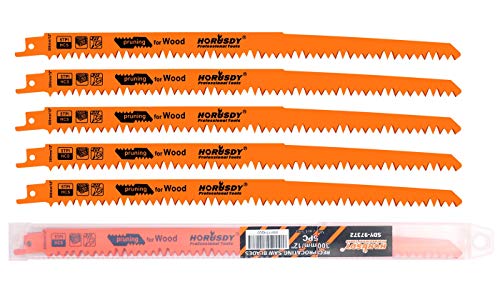
Pruning multiple trees or shrubs often requires more than one blade, especially for larger jobs. A multi-pack offers consistent performance and fewer interruptions for blade changes.
The HORUSDY 12-Inch Wood Pruning Blade 5-Pack delivers reliable rough cutting for outdoor pruning, making it a cost-effective choice for frequent users or those maintaining larger properties.
- 5-pack of 12-inch blades provides ample supply for extended pruning sessions
- High-speed carbon steel construction balances cutting speed with durability
- Universal fit works with all major reciprocating saw brands
Compared to single-blade options, this set emphasizes quantity and value, making it ideal for bulk cutting. The tradeoff is a basic tooth design without advanced features for extra-smooth cuts.
- Great value for quantity
- Longer 12-inch reach
- Fits most saw brands
- Durable storage case
- Suitable for rough cutting
- Basic tooth profile
- Not for nail-embedded wood
4. SEDY 12-Inch Wood Pruning Blade 5-Pack

For straightforward outdoor pruning tasks, a dependable blade set can make quick work of branches and small logs. Simplicity and compatibility are key for routine yard maintenance.
The SEDY 12-Inch Wood Pruning Blade 5-Pack is designed for users who want an easy-to-use, no-fuss solution for regular pruning. It’s a practical pick for seasonal cleanups and general garden work.
- 5-pack of 12-inch blades covers multiple pruning jobs before needing replacements
- High-speed carbon steel ensures consistent cutting and durability
- Universal compatibility fits all major reciprocating saw brands
This set prioritizes simplicity and broad compatibility over specialty features. The main tradeoff is a lack of advanced tooth geometry for ultra-smooth cuts.
- Simple and reliable
- Good for routine pruning
- Universal fit
- Includes storage case
- Affordable multi-pack
- No specialty tooth design
- Not for heavy-duty use
5. Diablo Demo Demon Carbide Pruning Blade

Pruning dense or tough wood can wear down standard blades quickly. A carbide-tipped blade offers extended life and consistent performance in demanding conditions.
The Diablo Demo Demon Carbide Pruning Blade is ideal for those who want maximum durability and less frequent blade changes, especially when working with challenging materials.
- Carbide tooth geometry delivers up to 50X longer cutting life than standard blades
- Oversized blade body increases stability for intense cutting tasks
- Perma-SHIELD coating prevents gumming and reduces friction
Compared to high-carbon steel blades, this option focuses on longevity and resilience. The tradeoff is a higher upfront cost and a single blade per pack.
- Exceptional durability
- Carbide-tipped teeth
- Handles tough wood
- Non-stick coating
- Large blade body
- Higher price point
- Single blade, not a pack
Buying Guide: How to Choose the Best Pruning Blade for Reciprocating Saws
Pruning blades for reciprocating saws are specialized tools designed to handle the unique demands of outdoor cutting—thick branches, wet wood, and tough garden debris. Buyers often face tradeoffs between blade length, tooth design, and durability, and may not realize how much these factors affect cutting efficiency and comfort. Many assume any reciprocating saw blade will work for pruning, but using the wrong type can lead to poor results, faster wear, or even safety issues.
- Blade Length Matters: Shorter blades (9 inches) are easier to control for small branches, while longer blades (12–15 inches) offer more reach for thick limbs and deep cuts
- Tooth Design Impacts Cutting: Aggressive, coarse teeth (5–6 TPI) are best for fast, rough cuts; triple-ground or Japanese-style teeth provide smoother, cleaner finishes
- Material Affects Durability: High carbon steel is common for general use, while chrome vanadium and carbide-tipped blades offer longer life and better performance in tough wood
- Pack Size vs. Single Blades: Multi-packs are cost-effective for frequent pruning, while premium single blades focus on longevity or specialty cutting
- Storage and Safety: Sets with secure storage cases reduce the risk of accidents and keep blades organized
- Compatibility Is Key: Most blades fit all major reciprocating saw brands, but always check for exceptions (e.g., some not fitting Ryobi)
- Common Misunderstandings: Not all wood blades are suitable for pruning; using demolition or metal blades can damage plants and tools
Choosing the Right Blade Length for Your Yard
Blade length is a major factor in how efficiently you can prune. Shorter blades (9 inches) are easier to maneuver for small trees and shrubs, while longer blades (12–15 inches) are better for reaching into dense branches or cutting through thick logs. If you have a mix of small and large pruning jobs, consider keeping both sizes on hand.
Tooth Geometry: Fast Cuts vs. Smooth Finishes
Tooth design directly affects how a blade cuts and how clean the result will be. Coarse, aggressive teeth (5 TPI) are best for fast, rough cuts and are ideal for clearing out dead wood or thick limbs. Triple-ground or Japanese-style teeth provide smoother, more controlled cuts, which is useful for live branches or when appearance matters.
- Aggressive teeth: Faster cutting, rougher finish
- Triple-ground/Japanese teeth: Smoother, cleaner cuts, less binding
Durability and Blade Material
If you prune often or work with dense, wet, or treated wood, blade material becomes more important. High carbon steel is affordable and works well for most garden tasks, but chrome vanadium and carbide-tipped blades last longer and resist dulling. These premium materials are worth considering for heavy-duty or professional use.
Multi-Packs vs. Premium Singles
For regular yard maintenance, multi-packs offer the best value and ensure you always have a sharp blade ready. If you only prune occasionally or need a blade for a specific tough job, a premium single blade (like carbide-tipped) may be a better investment.
Storage, Safety, and Compatibility
Blades with dedicated storage cases help prevent accidents and keep your workspace tidy. Always check that your chosen blade is compatible with your saw—most are universal, but some specialty blades may not fit every brand.
Final Buying Advice
Choosing the right pruning blade comes down to matching blade length, tooth design, and material to your specific yard needs. Avoid the temptation to overbuy on features you won’t use, but don’t settle for a basic blade if you regularly tackle tough or large branches.
- Match blade length to branch size for best results
- Choose tooth design based on whether you want speed or a cleaner finish
- Invest in premium materials if you prune frequently or cut dense wood
- Multi-packs are best for regular use; singles for specialty jobs
- Always check compatibility and use proper storage to stay safe and organized
FAQ For Pruning Blade For Reciprocating Saw
1. What size pruning blade should I use for my reciprocating saw?
2. Are all reciprocating saw blades suitable for pruning?
3. What is the difference between high carbon steel and carbide-tipped blades?
4. Do these blades fit all brands of reciprocating saws?
5. How do I store pruning blades safely?
6. Can I use pruning blades to cut materials other than wood?
Related Posts
- Best Wet Saw Tile Cutter
- Best Power Outage Lights: Top 7 Picks
- Top 6 Best Basement Electrical Wiring
- Best Power Sander For Drywall: Top 8 Picks
- Best Saw For Flooring: Top 7 Picks
- Top 5 Best Cordless Wet Dry Vac
- Best Hand Saws For Cutting Trees
- Top 6 Best Impact Wrench For Changing Tires
- Best Gas Powered Trimmer Edger Combo: Top 10 Picks
- Best Portable Saw Horses
- Top 7 Best Drill Ice Auger
- Best Saw For Cutting Pvc Panels: Top 6 Picks
- Top 9 Best Electric Heat Pump
- Best Hand Saw To Cut 2×4
- Best Angle Grinder Disc For Cutting Metal
- Top 10 Best Miter Saw Blade For Fine Cuts
- Top 6 Best Grinder Disc For Sharpening Mower Blades
- Best 200 Amp Electrical Panel: Top 10 Picks
- Top 6 Best Saw Blade For Vinyl Plank Flooring
- Top 6 Best Drill Bit For Granite Rock