
Starting out with woodworking or home projects can be overwhelming, especially when it comes to choosing the right saw. Many beginners struggle to find a tool that’s both safe and easy to control, while still offering enough versatility for different types of cuts and materials.
This guide reviews the best saws for beginners, focusing on options that balance user-friendly design, safety, and practical features. Whether you’re looking for a simple hand saw or a powered tool for more ambitious projects, you’ll find clear recommendations and tips on what to consider before you buy.



Our Top 6 Best Saw For Beginners Reviewed
After hands-on research and detailed comparisons, these Saw For Beginners products stood out as the most dependable choices.
1. Hammerhead 4.8-Amp Variable Speed Jig Saw
Woodworkers who tackle a range of projects need a jigsaw that adapts to different materials and cutting styles. Versatility is key for those who switch between straight, curved, and beveled cuts.
The Hammerhead 4.8-Amp Variable Speed Jig Saw is a strong all-around option, offering variable speed control, a 4-stage orbital function, and easy bevel adjustments. It's ideal for users who want one tool that can handle most woodworking tasks without fuss.
- Variable speed control lets you match cutting speed to material and blade
- 4-stage orbital function provides flexibility for smooth or aggressive cuts
- Tool-free T-shank blade change simplifies swapping blades for different jobs
Compared to more specialized or high-end models, this jigsaw delivers broad capability at a reasonable price. The tradeoff is a moderate power rating, which may not suit heavy-duty or prolonged use.
- Versatile for many wood types
- Easy speed adjustments
- Quick blade changes
- Bevel cutting up to 45°
- Moderate power for heavy tasks
- Corded design
2. Metabo HPT 10-Inch Single Bevel Miter Saw
When your projects require more capacity and precision than a mini saw can offer, a full-size miter saw is essential. This is especially true for woodworking tasks like trim, framing, or larger craft builds where accuracy and power are critical.
The Metabo HPT 10-Inch Single Bevel Miter Saw is a top choice for users who need professional-grade cutting ability in a portable package. Its improved miter scale, large table, and lightweight design make it suitable for both job sites and home workshops.
- 15-Amp, 5,000 RPM Motor: Delivers high power for smooth, effortless cuts on a variety of materials
- Wide Miter and Bevel Range: Supports precise angle adjustments for complex woodworking projects
- Lightweight 24 lb Design: Easy to transport and store without sacrificing cutting capacity
Compared to compact mini saws, the Metabo HPT offers much greater cutting depth and versatility. The tradeoff is a larger footprint and higher price, making it best for users who need serious cutting power.
- High cutting capacity
- Precise angle adjustments
- Lightweight for its size
- Large work table
- Professional-grade build
- Takes up more space
- Higher price point
3. CRAFTSMAN 12-Inch Mitre Saw & Box

For those who prefer manual tools or are just starting out, a mitre saw and box set solves the problem of making accurate angled cuts without power tools. It's a practical choice for small projects and learning the basics of joinery.
The CRAFTSMAN 12-Inch Mitre Saw & Clamping Box offers straightforward operation and built-in storage, making it an excellent fit for beginners who want control and simplicity. It's best for users working on picture frames, trim, or other small wood pieces.
- Cam-Shaped Pins: Secure workpieces for consistent, accurate cuts
- Multiple Angle Options: Supports common mitre and face angles
- Integrated Storage Bins: Keeps accessories organized
Compared to powered miter saws, this manual option is quieter, safer, and requires no electricity. It prioritizes simplicity and control, but is slower and less suited for large or repetitive tasks.
- No power required
- Simple to use
- Accurate angle settings
- Built-in storage
- Stable base
- Manual effort needed
- Not for large materials
4. RUITOOL 6-Inch Japanese Double Edge Saw
When you need clean, flush cuts or fine joinery, a Japanese pull saw offers control and accuracy that Western saws often can't match. This type of saw is valued for its ability to produce smooth, splinter-free edges with minimal effort.
The RUITOOL 6-Inch Japanese Double Edge Saw is an excellent option for woodworkers who want a compact, versatile hand saw. Its double-sided blade makes it suitable for both rip and cross cuts, and the high-carbon steel ensures durability for frequent use.
- Double-edged design: 17 TPI for hardwood, 14 TPI for softwood, covering a range of tasks
- SK5 high-carbon steel blade: Provides flexibility and long-lasting sharpness
- Three-sided ground teeth: Enables smoother, faster cuts with less tear-out
Compared to Western-style hand saws, this model prioritizes precision and finish quality. The tradeoff is that it requires a pull stroke technique, which may take some adjustment for users new to Japanese saws.
- Sharp, clean cuts
- Versatile double edge
- Lightweight and compact
- Durable blade material
- Ideal for joinery
- Not for thick stock
- Requires pull-stroke technique
5. Skil 15 Amp 7-1/4" Circular Saw
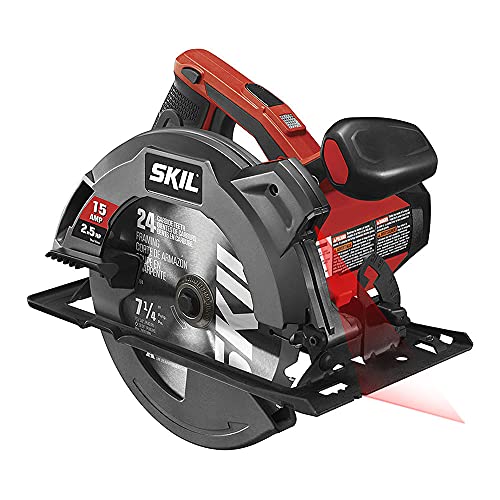
For long, straight cuts in flooring planks or plywood, a circular saw is a classic and reliable choice. The Skil 15 Amp 7-1/4" Circular Saw delivers the power and speed needed for efficient, accurate cuts across a range of flooring materials.
This saw is best for users who need to rip or crosscut boards quickly, especially in larger rooms or when working with thick materials. Its robust build and included carbide-tipped blade make it a solid option for both DIYers and pros.
- 15-amp motor: Provides fast, consistent cutting power
- Bevel capacity up to 51°: Allows for angled cuts and versatility
- Dust blower: Keeps the cut line visible for accuracy
Compared to flooring-specific saws, the circular saw offers more general-purpose use and cutting depth. However, it lacks the precision features needed for undercutting or flush work.
- Strong cutting power
- Wide bevel range
- Easy blade changes
- Good for large boards
- Dust management feature
- Not for flush cuts
- Requires steady handling
6. Skil 15 Amp 10 Inch Jobsite Saw

Cutting large panels or thick stock can be a challenge with smaller saws, especially when workspace is limited. A jobsite saw that manages bigger materials efficiently is essential for woodworkers tackling cabinetry, furniture, or framing projects.
The Skil 15 Amp 10 Inch Jobsite Saw stands out for its ability to handle full-size sheets and thicker lumber, making it a strong choice for those who need versatility and power in a portable format. It's ideal for users who want a saw that can transition from the garage to the jobsite without sacrificing capacity.
- Rack and pinion fence rails keep cuts straight and accurate, reducing setup time
- Integrated folding stand allows for quick transport and compact storage
- 4x4 cutting capacity enables deep cuts at 90 degrees for framing and heavy-duty tasks
Compared to more compact models, this saw prioritizes material handling and stability, but its larger footprint may not suit those with very limited space or who prioritize ultra-lightweight portability.
- Handles large sheet goods
- Integrated folding stand
- Parallel blade alignment
- Quick-release bevel adjustment
- Dust port for cleanup
- Bulkier than compact models
- Heavier to transport
Buying Guide: How to Choose the Best Saw for Beginners
Choosing your first saw can be confusing, given the variety of types and features available. Saws differ in their cutting style, ease of use, and suitability for different materials, so it's important to match the tool to your intended projects. Many beginners mistakenly assume that more power or size always means better results, but the right choice depends on your experience level and the tasks at hand.
- Hand Saws vs. Power Saws: Manual hand saws (like Japanese pull saws and mitre saws with boxes) offer control and safety for small projects, while power saws (jigsaws, circular saws, miter saws, table saws) provide speed and efficiency for larger or repetitive tasks.
- Cutting Style and Application: Jigsaws excel at curves and intricate shapes, circular saws are best for straight cuts in sheet goods, miter saws handle angled cuts, and table saws are ideal for repeated straight cuts in large panels.
- Portability and Storage: Mini and compact saws are easier to handle and store, while larger table or miter saws require more space but offer greater capacity.
- Material Compatibility: Some saws come with multiple blades or settings for cutting wood, metal, plastic, or tile. Make sure your choice matches your most common materials.
- Ease of Use and Safety: Features like laser guides, dust ports, and safety locks can make a big difference for beginners. Don't overlook comfort and control in favor of raw power.
- Common Misunderstandings: Many new users overestimate their need for large, professional-grade saws, or underestimate the value of manual tools for learning technique and control.
Manual vs. Powered Saws: Which to Start With?
Beginners often debate whether to start with a hand saw or jump straight to a power tool. Manual saws are quieter, safer, and ideal for learning basic technique, but can be slow for large projects. Power saws speed up the process and handle tougher materials but require more attention to safety and setup.
- Manual saws: Best for small projects, learning control, and occasional use
- Power saws: Better for frequent, larger, or more complex cuts
Choosing the Right Saw for Your Project Type
Different saws excel at different tasks. Consider what you'll be cutting most often:
- Jigsaws: Great for curves, shapes, and detailed work
- Circular saws: Best for straight, long cuts in plywood or lumber
- Miter saws: Ideal for frames, trim, and angled cuts
- Table saws: Suited for repeated, accurate cuts in large panels
- Mini/compact saws: Useful for portability and smaller DIY tasks
Key Features That Make a Difference for Beginners
Some features make saws much easier and safer for new users. Look for:
- Laser guides: Help keep cuts straight
- Variable speed or depth adjustment: Allows better control
- Easy blade changes: Saves time and reduces frustration
- Dust management: Keeps your workspace cleaner and safer
Portability, Storage, and Workspace Considerations
Not all beginners have a dedicated workshop. Compact and folding models are easier to store and move. Consider your available space before choosing a large table or miter saw.
- Mini and folding saws: Best for small spaces or occasional use
- Larger saws: Require a stable, permanent setup
Final Buying Advice
The best saw for you depends on your project needs, available space, and comfort with power tools. Start with a tool that matches your most common tasks and skill level, and don't be swayed by unnecessary features or size.
- Match the saw type to your main project needs
- Prioritize safety and ease of use over raw power
- Consider storage and portability for your workspace
- Don't overbuy—start simple and upgrade as your skills grow
- Manual saws are excellent for learning technique and control
FAQ For Saw For Beginners
1. What type of saw is best for a complete beginner?
2. Can I use one saw for all my DIY projects?
3. Are laser guides and dust ports important for beginners?
4. How important is portability when choosing a saw?
5. Do I need special blades for different materials?
6. Is a table saw necessary for beginners?
Related Posts
- Top 6 Best Band Saw For Resawing
- Best Table Saw Miter Gauge: Top 8 Picks
- Best Cordless Portable Air Compressor
- Top 5 Best Corded Jigsaw For Woodworking
- Best Hammers For Electricians: Top 8 Picks
- Best Adjustable Saw Horses
- Best Flashlight For Electricians: Top 10 Picks
- Best 20 Volt Drill: Top 8 Picks
- Top 7 Best Clamp Multimeter For Electricians
- Best Cordless Power Tool System
- Best Lineman Pliers For Electricians
- Best Chainsaw Bar Oil
- Top 9 Best Drill For Ice Fishing
- Top 8 Best Variable Speed Drill Press
- Top 10 Best Drill Press Table
- Best Impact Gun For Lug Nuts: Top 10 Picks
- Best Multi Tool Oscillating: Top 8 Picks
- Top 9 Best Budget Tile Saw
- Best Saw For Firewood: Top 9 Picks
- Best Hole Saw For Plastic: Top 5 Picks