
Few things are more frustrating than a stubborn or squeaky door lock, especially when you’re in a hurry or dealing with changing weather. Over time, dirt, moisture, and regular use can cause locks to stick, keys to jam, and hinges to creak, making daily routines less convenient and sometimes even compromising security.
The right lubricant can restore smooth operation, extend the life of your locks, and prevent future issues. In this guide, we compare the best lubricants for door locks, highlighting their strengths, application methods, and suitability for different lock types. Whether you need a quick fix for a noisy hinge or long-term protection for outdoor locks, you’ll find the best options here.


Our Top 9 Best Lubricant For Door Locks Picks
Whether you’re buying your first Lubricant For Door Locks or replacing an old one, we compared trusted options to help you make an informed choice.
1. 3-IN-ONE Lock Dry Lube Aerosol, 2.5 OZ
Padlocks exposed to the elements or heavy use can become stiff and unreliable, making access a chore. Using a quick-drying lubricant helps prevent sticking and corrosion, ensuring your locks operate smoothly in all conditions.
This 3-IN-ONE Lock Dry Lube is a practical choice for anyone seeking a versatile, easy-to-apply solution. Its clear, fast-drying formula is suitable for home, auto, and commercial locks, making it especially useful for families or anyone managing multiple lock types.
- Quick-drying clear formula: Won't attract dirt, keeping locks clean and functional
- Attachable straw and wide spray: Allows precise or broad application for different lock sizes
- Safe on most surfaces: Compatible with metal, wood, and most plastics (except clear polycarbonate and polystyrene)
Compared to oil-based alternatives, this aerosol dries quickly and leaves a protective film without sticky residue. It prioritizes convenience and cleanliness, though users should note it may not be ideal for locks exposed to extreme cold for extended periods.
- Dries quickly and clear
- Easy straw or wide spray application
- Suitable for most lock types
- Does not attract dirt
- Protects against corrosion
- Not for clear polycarbonate/plastics
- Aerosol not ideal for very cold climates
2. Hillman Graphite Tube Key Lock Lubricant
Applying graphite powder to padlocks can be messy and imprecise, leading to wasted product and dirty hands. A tube with a dispenser tip offers a cleaner, more targeted way to lubricate locks.
Hillman’s Graphite Tube is ideal for users who want the benefits of graphite without the mess. Its convenient tip fits directly into keyholes, making it perfect for car doors, trunk locks, and outdoor padlocks.
- Dispenser tip design: Allows precise, mess-free application directly into lock mechanisms
- Graphite formula: Keeps locks lubricated and working smoothly
- Instructions included: Easy for first-time users to apply correctly
Unlike sprays or loose powders, this tube prioritizes clean handling and targeted use. The main tradeoff is that it may not cover large or external lock surfaces as efficiently as an aerosol.
- Precise application
- Minimal mess
- Great for keyholes
- Easy to use
- Includes instructions
- Not ideal for large surfaces
- Limited to graphite lubrication
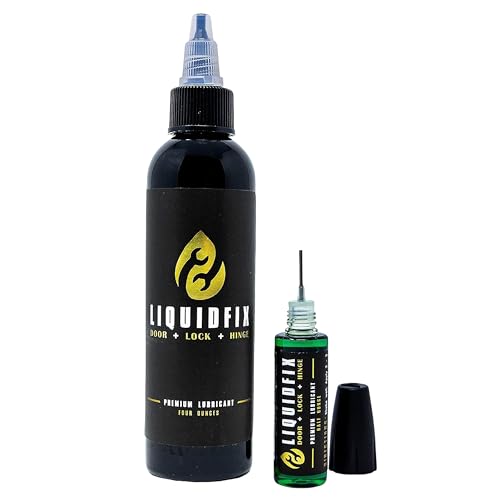
3. LIQUIDFIX Door Lock & Hinge Lubricant Kit
Hinges and locks can seize up or squeak, especially in cold climates where standard lubricants often fail. This kit addresses both broad and precise lubrication needs, making it a practical choice for households facing seasonal temperature swings.
The LIQUIDFIX kit stands out for its dual-bottle system: a larger dropper for wide surfaces and a needle oiler for tight spots. Homeowners who want a single solution for everything from sliding doors to intricate locks will appreciate its versatility, especially if they deal with freezing temperatures.
- Two-application bottles: Includes both a 4 oz dropper and 0.5 oz needle oiler for flexible use
- -55F freezing point: Reliable lubrication in unheated garages or winter-exposed hardware
- Corrosion barrier: Moisture-resistant formula helps prevent rust and extend hinge life
Compared to single-bottle or aerosol options, LIQUIDFIX prioritizes adaptability and cold-weather reliability. The tradeoff is a slightly bulkier kit to store, but the convenience and performance in harsh conditions make it worthwhile for most homes.
- Dual bottle system
- Works in extreme cold
- Reduces squeaks instantly
- Prevents corrosion
- Non-aerosol application
- Takes up more storage space
- Not as fast to apply as sprays
4. BTAS Door Lock Hinge Lubricant Needle Oiler

Messy or imprecise lubrication can stain surfaces or fail to reach the source of a squeak. BTAS offers a straightforward solution with its needle oiler, making targeted application easy for any user.
This product is best for those who want a no-fuss, precise way to silence squeaky hinges and locks without cleanup. Its formula is also non-toxic and odorless, making it suitable for indoor use.
- Needle spout: Delivers lubricant exactly where needed, minimizing mess
- All-purpose formula: Works on hinges, locks, tools, and small bearings
- Non-toxic ingredients: Safe for use around family and pets
Compared to sprays or large bottles, BTAS focuses on simplicity and control. The tradeoff is a smaller size and less versatility for big jobs.
- Pinpoint application
- No mess
- Safe and odorless
- Works on many parts
- Small bottle
- Not for large surfaces
5. WD-40 Specialist Silicone Lubricant Spray

Many lubricants are limited to metal, but household hardware often includes plastic, vinyl, and rubber parts that need care too. This silicone spray solves the problem by working safely across a wide range of materials.
WD-40 Specialist Silicone is a go-to for those who want a single product for hinges, locks, pulleys, and even non-metal surfaces. It’s especially useful for homes with mixed-material hardware or anyone seeking a residue-free finish.
- Multi-surface safe: Lubricates metal, plastic, vinyl, and rubber
- Dries clear: Leaves no sticky residue, reducing dust attraction
- Quick-drying formula: Protects without leaving a greasy film
Compared to oil-based products, this spray excels in versatility and clean application. However, it may not penetrate as deeply into tight hinge pins as needle oilers.
- Works on many materials
- Dries quickly
- Leaves no sticky residue
- Trusted brand
- Easy spray application
- Less precise than needle oilers
- Not for deep penetration
6. AGS MR. ZIP Extra Fine Graphite Lubricant 2oz

Padlocks in dusty or dirty environments can become clogged if lubricants attract debris. A dry graphite film can help repel dust and keep locks functioning smoothly over time.
AGS MR. ZIP Extra Fine Graphite Lubricant is ideal for those who want a dry, dust-repellent solution that works in both hot and cold conditions. Its fine powder formula is easy to carry and apply for home, automotive, or industrial use.
- Extra fine graphite powder: Creates a dry film that repels dust and dirt
- Works in extreme temperatures: Suitable for hot and cold environments
- Portable 2 oz container: Convenient for toolboxes and travel
Compared to wet or oil-based lubricants, this product prioritizes dust resistance and dry application. The tradeoff is that it may require more careful handling to avoid mess during use.
- Repels dust and dirt
- Works in all temperatures
- Portable size
- Versatile for many uses
- Can be messy if spilled
- Not as precise as tube applicators
7. Qucship Door Hinge Lubricant Needle Oiler

Rust and squeaks can make doors, locks, and even tools hard to use and noisy. This lubricant is designed to offer lasting protection against both, making it a solid choice for ongoing home maintenance.
Qucship’s needle oiler delivers precise application, so you can target small gaps without mess. It’s ideal for those who want a simple, effective way to keep hardware moving smoothly and rust-free through all seasons.
- Rust inhibitors: Guards metal parts from corrosion in any weather
- -55F freeze resistance: Maintains performance in cold environments
- Needle tip applicator: Reaches tight spots with minimal waste
Unlike bulkier kits or sprays, Qucship focuses on easy, targeted use and long-term rust prevention. The main limitation is the smaller 1 oz bottle, which may run out faster for larger jobs.
- Strong rust protection
- Needle tip for precision
- Works in freezing temps
- Non-toxic and odorless
- Multi-purpose use
- Small bottle size
- Not ideal for large surfaces
8. AGS Lock-Ease Graphite Lock Lubricant Aerosol

Cold weather can cause padlocks to freeze, leaving you locked out at the worst times. A graphite-based lubricant helps prevent freezing and keeps locks turning smoothly even in winter.
AGS Lock-Ease is a strong choice for those in colder climates or anyone worried about residue buildup. Its graphite formula reduces friction, prevents freezing, and avoids sticky buildup, making it ideal for outdoor padlocks and automotive locks.
- Graphite-based formula: Reduces friction and prevents freezing in cold weather
- No sticky residue: Won’t attract dirt or dust over time
- Versatile use: Suitable for padlocks, deadbolts, and automotive locks
Compared to oil-based sprays, this product excels in cold and dusty environments. It prioritizes freeze resistance and clean operation, but may not provide the same corrosion protection as some all-purpose formulas.
- Prevents lock freezing
- No sticky residue
- Reduces wear and tear
- Works on many lock types
- Less corrosion protection
- Graphite can be messy if overapplied
9. BTAS Lock Door Hinge Lubricant Needle Oiler 1 oz

Households with children or pets need a lubricant that is both effective and safe for everyday use. Non-toxic formulas are essential for peace of mind during routine maintenance.
BTAS Lock Door Hinge Lubricant Needle Oiler offers pinpoint application and a non-toxic, odorless formula, making it a smart choice for families. It’s best for those who want to eliminate squeaks without introducing harsh chemicals into the home.
- Non-toxic and odorless for safe use around the house
- Needle applicator ensures precise, mess-free lubrication
- Multi-purpose compatibility covers fans, locks, drawers, and more
Compared to traditional greases or sprays, this product prioritizes household safety and clean application. The tradeoff is a lighter formula that may need more frequent use on high-friction or outdoor hinges.
- Safe for children and pets
- Precise application
- No odor or mess
- Works on various parts
- Not for heavy-duty hinges
- Small bottle size
Buying Guide: How to Choose the Best Lubricant for Door Locks
Choosing the right lubricant for door locks involves understanding the technical differences between formulas, application methods, and the specific needs of your locks and hinges. Buyers often face tradeoffs between ease of use, cleanliness, long-term protection, and compatibility with different materials. Many assume any household oil will work, but using the wrong product can attract dirt, damage lock mechanisms, or fail in extreme temperatures.
- Dry graphite vs. liquid lubricants: Dry graphite repels dust and is ideal for keyholes, while liquid and silicone options are better for hinges and broader surfaces
- Aerosol, dropper, or needle applicator: Aerosols cover large areas quickly but can overspray; needle oilers offer precise, mess-free application
- Cold weather performance: Not all lubricants work in freezing conditions; check for cold-resistant formulas if you live in a harsh climate
- Residue and dirt attraction: Oil-based products can attract dust, while dry or silicone-based lubricants stay cleaner over time
- Safety and toxicity: Non-toxic, odorless formulas are best for homes with children or pets
- Volume and portability: Large cans suit frequent use or multiple locks; small bottles are more portable for quick fixes
Choosing Between Dry Graphite and Liquid Lubricants
The main decision is whether you need a dry graphite or a liquid lubricant. Dry graphite is best for keyholes and locks where attracting dust is a concern, while liquids and silicone sprays are better for hinges and mixed-material hardware. Consider where and how often you’ll apply the lubricant.
- Dry graphite: Clean, dust-repellent, best for key slots
- Liquid/silicone: Smoother action for hinges, broader compatibility
Application Method: Aerosol, Dropper, or Needle Oiler?
Application style affects both convenience and precision. Aerosols are fast for large surfaces but can be messy. Needle oilers and droppers allow for targeted application, reducing waste and keeping your hardware clean.
- Aerosol: Quick coverage, may overspray
- Needle oiler: Precise, mess-free, ideal for small parts
- Dropper: Good for moderate control and broader surfaces
Cold Weather and Outdoor Use
If your locks are exposed to freezing temperatures, choose a lubricant rated for low temperatures. Some formulas remain effective down to -55°F, preventing locks from freezing or seizing up in winter.
Safety, Odor, and Household Suitability
For homes with children or pets, non-toxic and odorless lubricants are preferable. Some products are also safe for use near electronics, making them more versatile for modern households.
Volume and Maintenance Frequency
Consider how often you’ll need to reapply lubricant. Large cans are economical for frequent use or multiple locks, while small bottles are easier to store and use for occasional fixes.
Final Buying Advice
Selecting the best lubricant for your door locks depends on your specific needs, climate, and maintenance habits. Avoid using general-purpose oils, which can attract grime and cause more harm than good. Match the product type to your most common lock issues for best results.
- Choose dry graphite for keyholes and dust-prone areas
- Pick silicone or liquid lubricants for hinges and mixed materials
- Use needle oilers for precise, mess-free application
- Opt for cold-resistant formulas in winter climates
- Don’t over-apply—use only as much as needed to avoid buildup
FAQ For Lubricant For Door Locks
1. What type of lubricant is best for door locks?
2. Can I use WD-40 on my door locks?
3. How often should I lubricate my door locks?
4. Is it safe to use lubricants around children and pets?
5. Will lubricants prevent locks from freezing in winter?
6. What’s the difference between aerosol and needle oiler lubricants?
Related Posts
- Best Construction Ear Protection: Top 6 Picks
- Best Shade For Mig Welding
- Top 10 Best Weed Eater Head For Stihl
- Best Paint For Chassis: Top 6 Picks
- Top 9 Best Light For Pistol
- Best Mini Skid Steer For Landscaping: Top 6 Picks
- Top 6 Best Screws For Floating Shelves
- Top 6 Best Gravel For French Drain
- Best Bonding Primer For Oil Based Paint
- Top 7 Best 3 Ton Mini Split
- Best Beginner Soldering Iron
- Top 6 Best Pressure Washer Hose For Car Detailing
- Best Tool For Hanging Pictures: Top 9 Picks
- Top 5 Best Magnetic Welding Ground Clamp
- Best Brush To Use With Polyurethane
- Top 5 Best Spray Paint For Bikes
- Best Nail Gun For Flooring: Top 9 Picks
- Best Glue For Aluminium To Aluminium: Top 6 Picks
- Best Hand Truck Dolly: Top 9 Picks
- Top 10 Best Glue For Engineered Wood Flooring