
Sticky or squeaky window tracks can quickly turn a simple task into a daily frustration. Over time, dirt, moisture, and friction can cause windows and sliding doors to stick, making them difficult to open or close and potentially leading to long-term damage.
The right lubricant can restore smooth operation, protect against corrosion, and extend the life of your windows and doors. In this guide, we review the best lubricants for window tracks, comparing ease of use, compatibility, and durability, so you can choose the best option for your home’s needs.


Our Top 9 Best Lubricant For Window Tracks Picks
Whether you’re buying your first Lubricant For Window Tracks or replacing an old one, we compared trusted options to help you make an informed choice.
1. 3-IN-ONE RVcare Window & Track Dry Lube
Sliding door maintenance can be messy, especially when lubricants attract dirt or drip onto surrounding surfaces. A clean, dry formula is essential for keeping tracks smooth without creating new problems.
3-IN-ONE RVcare Window & Track Dry Lube is designed for users who want a quick-drying, residue-free solution. Its smart straw nozzle offers precise control, making it ideal for RV owners, renters, or anyone who values a tidy application and minimal cleanup.
- Quick-drying formula: Leaves a clear, protective film that doesn't attract dirt
- Smart straw nozzle: Offers controlled, mess-free application
- Corrosion protection: Helps prevent repairs by shielding against the elements
Compared to traditional sprays and greases, this product prioritizes cleanliness and ease of use. The tradeoff is that it may not offer the same heavy-duty lubrication for high-load or industrial doors.
- Dries clear and clean
- No dirt attraction
- Precise application
- Long-lasting protection
- Great for RVs
- Not for heavy-duty tracks
- Avoid on clear plastics
2. WD-40 Specialist Silicone Lubricant Spray

Many lubricants are limited to metal, but household hardware often includes plastic, vinyl, and rubber parts that need care too. This silicone spray solves the problem by working safely across a wide range of materials.
WD-40 Specialist Silicone is a go-to for those who want a single product for hinges, locks, pulleys, and even non-metal surfaces. It’s especially useful for homes with mixed-material hardware or anyone seeking a residue-free finish.
- Multi-surface safe: Lubricates metal, plastic, vinyl, and rubber
- Dries clear: Leaves no sticky residue, reducing dust attraction
- Quick-drying formula: Protects without leaving a greasy film
Compared to oil-based products, this spray excels in versatility and clean application. However, it may not penetrate as deeply into tight hinge pins as needle oilers.
- Works on many materials
- Dries quickly
- Leaves no sticky residue
- Trusted brand
- Easy spray application
- Less precise than needle oilers
- Not for deep penetration
3. WD-40 Specialist Dry Lube Smart Straw

Dust and grime can quickly accumulate in window tracks, making movement stiff or noisy. Dry lubricants are ideal for keeping tracks clean and free-moving, especially in dusty environments.
This WD-40 Specialist Dry Lube offers a residue-free finish that resists dirt and dust. The Smart Straw nozzle provides both precision and broad application, making it suitable for users who want flexibility and minimal mess. It’s a strong fit for anyone maintaining multiple types of surfaces.
- Residue-free formula keeps tracks clean and dust-free
- Safe on most metals, plastics, and rubbers for broad use
- Smart Straw nozzle allows precise or wide application
Compared to traditional greases, this product focuses on cleanliness and ease of use. The main tradeoff is that it may not provide as much long-term lubrication as heavier greases.
- No sticky residue
- Flexible application
- Resists dirt and dust
- Works on many surfaces
- Easy to control
- Not for heavy-duty needs
- May need frequent use
4. Keze Silicone Grease PTFE Lubricant Tube
Sliding doors exposed to extreme temperatures—whether in unheated garages or sun-exposed patios—require a lubricant that remains effective in both hot and cold conditions. Ordinary lubricants can break down or become ineffective outside standard temperature ranges.
Keze Silicone Grease PTFE Lubricant Tube is formulated to retain its consistency from -40°F to 428°F, making it ideal for challenging environments. It's a strong choice for users needing reliable lubrication in areas with significant temperature fluctuations or for specialized applications like food machinery.
- Wide temperature tolerance: Remains stable from -40°F to 428°F for year-round reliability
- PTFE-enhanced silicone: Offers excellent resistance to chemicals and abrasion
- NSF H1 rated: Safe for incidental food contact and clean use
This product stands out for its versatility in harsh conditions, but the tradeoff is that it may be more than most indoor sliding doors require.
- Handles extreme temperatures
- PTFE for added durability
- Food-safe certification
- Resistant to chemicals
- Multi-purpose applications
- Overkill for typical home use
- Requires careful application
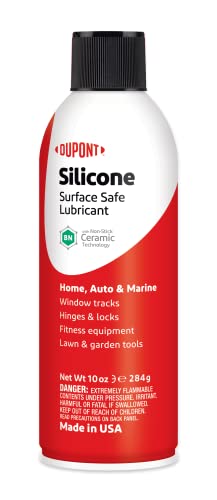
5. DuPont Silicone Lubricant with Teflon
Sliding doors made from or containing non-metal materials like plastic, vinyl, or rubber can be damaged by harsh or inappropriate lubricants. A gentle, effective solution is needed to prevent squeaks and binding without causing deterioration.
DuPont Silicone Lubricant with Teflon is engineered for use on sensitive materials, making it a smart pick for homes with modern or mixed-material sliding doors. It's especially useful for those looking to protect and preserve non-metal components while eliminating noise and friction.
- Safe for non-metal materials: Suitable for rubber, plastic, vinyl, leather, and wood
- Waterproofs and protects: Guards against rust, oxidation, and corrosion
- Teflon-enhanced formula: Reduces friction and binding for smooth operation
Compared to all-purpose lubricants, this product prioritizes material safety and gentle protection. The main tradeoff is that it may not provide the same heavy-duty performance as greases designed for metal tracks.
- Gentle on plastics and rubber
- Prevents corrosion
- Reduces squeaks
- Teflon-enhanced
- Multi-surface use
- Not for high-load tracks
- Light-duty formula
6. Keze 92003 Silicone Grease with PTFE

Some environments require lubricants that are food-safe and non-contaminating, especially when 3D printers are used near food prep or sensitive equipment. Choosing a certified option ensures peace of mind.
Keze 92003 is NSF H1 rated for food safety, making it a strong choice for users who need a lubricant that won’t compromise cleanliness or safety. It's also suitable for a range of materials and applications beyond 3D printing.
- NSF H1 food-safe certification for sensitive environments
- Wide temperature resistance for versatile use
- PTFE-enhanced for smooth, low-friction operation
Compared to standard greases, this product prioritizes safety and regulatory compliance. The tradeoff is that it may be more than needed for typical home 3D printer setups.
- Certified food-safe
- Works on many materials
- Wide temperature range
- Reduces friction
- Odorless
- Specialized use case
- Higher cost for basic needs
7. 3-IN-ONE RV Care Trio Maintenance Pack

Maintaining RV windows, tracks, and seals often requires multiple products for different surfaces. An all-in-one kit simplifies routine care and helps prevent costly repairs.
The 3-IN-ONE RV Care Trio Pack includes lubricants for slide-outs, window tracks, and rubber seals, making it a convenient choice for RV owners or anyone maintaining several moving parts. It’s best for those who want a comprehensive solution in one purchase.
- Three specialized products for tracks, slide-outs, and seals
- Smart Straw nozzle for easy, precise application
- UV inhibitors in rubber seal conditioner to prevent cracking
Compared to single-product options, this kit offers greater versatility but may be more than needed for basic home window maintenance.
- Complete maintenance set
- Covers multiple surfaces
- Easy application
- Protects against UV damage
- Trusted brand
- More than needed for some
- Higher upfront cost
8. Glodway Automotive Window Track Lubricant

Automotive window tracks and seals are exposed to weather and frequent use, making smooth operation and protection from corrosion essential. A dedicated track lubricant can help extend the life of these components.
Glodway’s Silicone Seal Lubricant is designed for electric windows and rubber seals, with a two-way straw for easy application in hard-to-reach areas. It’s a good fit for car owners looking to maintain window function without disassembling door panels.
- Two spray modes for targeted or broad coverage
- Conditions rubber seals to prevent drying and sticking
- Long-lasting corrosion protection for outdoor exposure
Compared to general-purpose sprays, this product is tailored for automotive needs, but may not be as versatile for home use.
- Easy straw application
- Protects rubber seals
- Prevents corrosion
- No need to disassemble panels
- Works on various vehicles
- Automotive focus
- Not for all home uses
9. Impresa Heavy Duty Sliding Door Lubricant

Heavy sliding doors, like those found in garages or patios, demand a lubricant that can withstand frequent use and significant weight. Without proper lubrication, these doors can become difficult to operate and prone to wear.
The Impresa Heavy Duty Sliding Door Lubricant is formulated for tough jobs, providing long-lasting lubrication that keeps tracks and hinges moving smoothly. It's particularly well-suited for homeowners with large or frequently used sliding doors who want a mess-free, reliable solution.
- Heavy-duty silicone grease: Designed for high-load tracks and hinges, reducing wear and sticking
- Long-lasting performance: Offers durable lubrication, minimizing the need for frequent maintenance
- Versatile application: Suitable for door tracks, hinges, hatches, and more
Unlike lighter sprays, this grease offers superior staying power on demanding applications. The tradeoff is that it may require more careful application to avoid overuse or buildup.
- Ideal for heavy doors
- Long-lasting lubrication
- Reduces wear on tracks
- Clean application
- Multi-purpose use
- May be excessive for light doors
- Can require careful application
Buying Guide: How to Choose the Best Lubricant for Window Tracks
Lubricants for window tracks come in several forms, each with unique benefits and limitations. Choosing the right one can make a big difference in how smoothly your windows and doors operate, how much maintenance is required, and how well your hardware is protected from wear and the elements. Many buyers assume all lubricants work the same, but the differences in formula, application, and compatibility are important to understand.
- Spray Lubricants: Offer quick, even coverage and are ideal for reaching tight spaces or treating long tracks. Best for convenience and minimal mess.
- Grease Lubricants: Provide long-lasting, heavy-duty protection, especially in high-friction or high-use areas. Can be messier and may attract dirt if overapplied.
- Stick Lubricants: Deliver precise, no-mess application for small tracks or delicate surfaces. Great for touch-ups and light-duty needs.
- Dry vs. Wet Formulas: Dry lubes resist dirt and dust buildup, keeping tracks clean, while wet or grease-based options offer more robust, longer-lasting lubrication.
- Material Compatibility: Not all lubricants are safe for every surface. Some are ideal for metal, others for plastic, vinyl, or rubber. Always check compatibility to avoid damage.
- Temperature Tolerance: If your windows or doors are exposed to extreme temperatures, choose a lubricant rated for those conditions to ensure consistent performance.
- Ease of Application: Consider whether you prefer sprays, squeeze tubes, or sticks based on your comfort and the size of the job.
- Common Misunderstandings: Many buyers overapply lubricant, leading to buildup and attracting dirt. Others use the wrong type for their material, causing damage or poor results.
Choosing Between Sprays, Greases, and Sticks
The main decision is how you want to apply the lubricant and what level of protection you need. Sprays are best for quick, even coverage and hard-to-reach areas. Greases work well for heavy-duty or high-use tracks, while sticks are perfect for precise, mess-free touch-ups.
- Sprays: Fast, easy, and good for long tracks or multiple surfaces
- Greases: Best for durability and heavy loads, but can be messier
- Sticks: Cleanest option for small jobs or delicate hardware
Matching Lubricant Type to Window Material
Not all lubricants are safe for every material. Silicone and PTFE-based products are generally safe for plastic, vinyl, and rubber, while some traditional greases may only suit metal. Always check the label and choose a product that matches your window track material.
Considering Environmental Exposure and Use Frequency
If your windows or doors are exposed to outdoor weather or frequent use, look for lubricants with corrosion protection and wide temperature tolerance. For indoor or light-use windows, a simple stick or dry lube may be sufficient.
All-in-One Kits vs. Single-Purpose Products
Some buyers prefer a kit that covers all maintenance needs, especially for RVs or multi-surface care. Others may only need a single, specialized lubricant for a specific problem area. Kits offer convenience but may include products you don’t use.
Final Buying Advice
Selecting the right lubricant comes down to matching the product to your window type, usage, and maintenance preferences. Avoid overbuying by focusing on your actual needs, and don’t overlook compatibility with your window materials.
- Choose sprays for convenience and coverage
- Pick greases for heavy-duty or outdoor use
- Use sticks for mess-free, precise application
- Check temperature and material compatibility
- Avoid overapplying to prevent dirt buildup
FAQ For Lubricant For Window Tracks
1. What type of lubricant is best for window tracks?
2. How often should I lubricate my window tracks?
3. Can I use WD-40 on window tracks?
4. Will lubricant damage my window material?
5. Is grease or spray better for sliding doors?
6. How do I apply lubricant to window tracks?
Related Posts
- Best Construction Ear Protection: Top 6 Picks
- Best Shade For Mig Welding
- Top 10 Best Weed Eater Head For Stihl
- Best Paint For Chassis: Top 6 Picks
- Top 9 Best Light For Pistol
- Best Mini Skid Steer For Landscaping: Top 6 Picks
- Top 6 Best Screws For Floating Shelves
- Top 6 Best Gravel For French Drain
- Best Bonding Primer For Oil Based Paint
- Top 7 Best 3 Ton Mini Split
- Best Beginner Soldering Iron
- Top 6 Best Pressure Washer Hose For Car Detailing
- Best Tool For Hanging Pictures: Top 9 Picks
- Top 5 Best Magnetic Welding Ground Clamp
- Best Brush To Use With Polyurethane
- Top 5 Best Spray Paint For Bikes
- Best Nail Gun For Flooring: Top 9 Picks
- Best Glue For Aluminium To Aluminium: Top 6 Picks
- Best Hand Truck Dolly: Top 9 Picks
- Top 10 Best Glue For Engineered Wood Flooring