
Choosing the right stationary air compressor can be overwhelming, especially with so many models offering different tank sizes, motor types, and maintenance requirements. Whether you’re tackling automotive repairs, woodworking, or general DIY projects, the wrong compressor can mean wasted time, excess noise, or even tool compatibility issues.
This guide breaks down the best stationary air compressors for home and workshop use, comparing their strengths in capacity, noise level, portability, and maintenance. We’ll help you match your needs to the right model—whether you want quiet operation, large air reserves, or easy mobility—so you can work efficiently and confidently.

Top 8 Best Stationary Air Compressor
Finding the right Stationary Air Compressor isn’t always straightforward. To simplify the process, we compared leading products and shortlisted the ones that truly stand out.
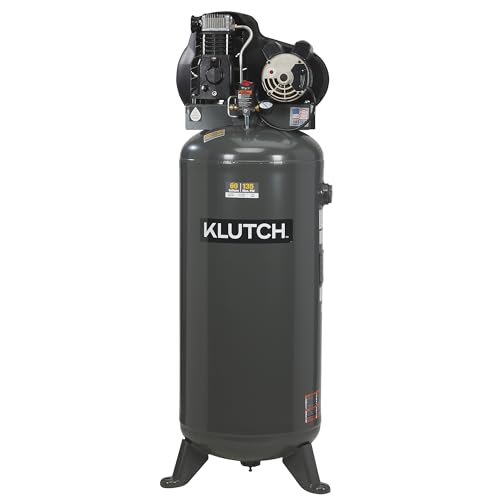
1. Klutch 60-Gallon Single-Stage Vertical Air Compressor
A reliable air compressor is essential for anyone running a home workshop or handling regular DIY projects. The Klutch 60-Gallon Single-Stage Vertical Air Compressor addresses the need for steady, dependable air supply for a wide range of pneumatic tools.
This model stands out for its robust 3.7 HP dual-induction motor and durable cast iron pump, making it a strong choice for users who value reliability and long-term performance. It's ideal for home workshops where consistent output and minimal downtime are priorities.
- 3.7 HP Dual-Induction Motor: Delivers 9.3 CFM at 90 PSI for sustained tool operation
- Cast Iron Oil-Lubricated Pump: Enhances durability and reliability for frequent use
- Maximum Pressure 135 PSI: Supports a variety of air tools without frequent cycling
Compared to smaller or portable compressors, the Klutch prioritizes steady output and rugged construction, making it well-suited for users who need a dependable workhorse. The tradeoff is its stationary design, which limits portability.
- Strong and consistent air supply
- Durable cast iron pump
- Suitable for most home workshop tools
- Low maintenance with oil lubrication
- Reliable for frequent use
- Not portable
- Requires dedicated space
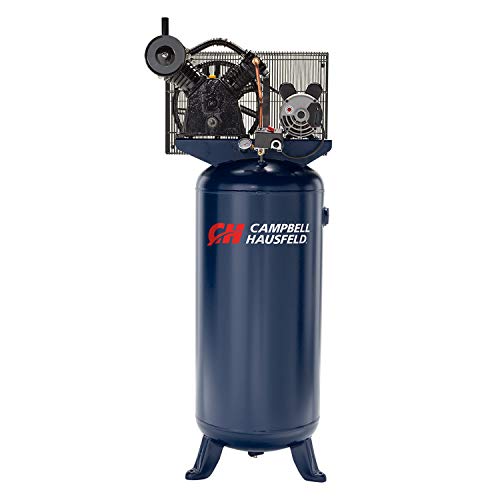
2. Campbell Hausfeld 60-Gallon 2-Stage Vertical Compressor
For demanding home improvement projects, having a compressor that can handle continuous use and high-pressure requirements is crucial. The Campbell Hausfeld 60-Gallon 2-Stage Vertical Compressor is designed to meet these needs, offering reliable performance for garages and workshops.
This model features a two-stage, oil-lubricated pump and a maximum pressure of 175 PSI, making it a solid option for users who need higher air pressure for a variety of tools. Its vertical design also helps save valuable floor space in busy work areas.
- Two-Stage Oil-Lubricated Pump: Ensures longevity and consistent performance
- 175 PSI Maximum Pressure: Supports a wider range of pneumatic tools
- Space-Saving Vertical Tank: Optimizes workshop layout and storage
Compared to single-stage or lower-pressure models, this compressor offers greater versatility for demanding tasks. However, its size and stationary design mean it’s best for permanent installation rather than portability.
- High maximum pressure
- Efficient for continuous use
- Space-saving vertical tank
- Reliable two-stage pump
- Suitable for demanding applications
- Heavy and stationary
- Requires 230V power supply
3. DEWALT 60-Gallon Vertical Air Compressor
Many workshops face challenges with electrical compatibility when installing large air compressors. The DEWALT 60-Gallon Vertical Air Compressor solves this by offering a spread volt motor that works with both 208V and 230V, making installation more flexible.
This compressor is a strong choice for users who may need to relocate or upgrade their workspace, thanks to its adaptable voltage and robust 3.7 HP motor. It’s well-suited for a range of pneumatic tools and environments where electrical setups may vary.
- Spread Volt Motor (208V/230V): Easy integration into different electrical systems
- 11.5 CFM at 90 PSI: Supports a wide range of air tools efficiently
- ASME-Certified Tank: Meets safety standards for peace of mind
Compared to models with fixed voltage requirements, the DEWALT prioritizes installation flexibility and tool compatibility. The tradeoff is that it still requires a dedicated electrical circuit and is not portable.
- Flexible voltage compatibility
- High CFM output
- Meets safety standards
- Oil-lubricated for longevity
- Suitable for varied setups
- Requires professional installation
- Stationary design
4. California Air Tools 4.0 HP Ultra Quiet 60-Gallon

Noise and maintenance are common concerns for home and shop air compressor users. The California Air Tools 4.0 HP Ultra Quiet 60-Gallon addresses both by delivering powerful performance at just 75 decibels and using an oil-free dual piston pump for reduced upkeep.
This model is ideal for noise-sensitive environments and users who want to minimize maintenance tasks. Its twin motors and automatic drain valve further enhance convenience and longevity, making it a practical choice for busy workshops.
- Ultra Quiet (75 dB) Operation: Suitable for shared or indoor spaces
- Oil-Free Dual Piston Pump: Reduces maintenance and provides cleaner air
- Automatic Drain Valve: Simplifies upkeep and extends tank life
Compared to traditional oil-lubricated compressors, this model prioritizes quiet operation and ease of maintenance. The main tradeoff is a slightly lower maximum pressure (125 PSI) compared to some high-pressure alternatives.
- Very quiet operation
- Low maintenance oil-free pump
- Automatic drain valve
- Twin motors for longer run times
- Large tank for extended use
- Lower max PSI than some models
- Larger footprint
5. VEVOR 13-Gallon 2HP Oil-Free Portable Compressor

For users who need a balance between portability and performance, a mid-sized compressor is often the answer. The VEVOR 13-Gallon 2HP Oil-Free Portable Compressor offers a practical solution for home, office, and light shop tasks, especially where quiet operation and easy transport are valued.
This model is well-suited for DIYers, hobbyists, and anyone needing a compressor that can move between locations without hassle. Its oil-free, low-noise design keeps maintenance simple and operation pleasant.
- 13-Gallon Tank with 2HP Motor: Fast air buildup for quick starts
- Oil-Free, Quiet Technology (66 dB): Minimal maintenance and low noise
- Reinforced Wheels and Handle: Easy to move between workspaces
Compared to larger stationary models, the VEVOR prioritizes flexibility and user convenience. The tradeoff is a smaller tank and lower capacity, making it less suitable for extended, high-demand tasks.
- Portable and easy to move
- Quiet oil-free operation
- Quick air buildup
- Includes essential accessories
- Low maintenance
- Smaller tank limits run time
- Not for heavy-duty industrial use
6. VEVOR 80-Gallon 6.5HP Oil-Free Stationary Compressor

When extended air supply and rapid inflation are critical, a high-capacity compressor is essential. The VEVOR 80-Gallon 6.5HP Oil-Free Stationary Compressor is built to deliver long-term, high-volume air for demanding production and workshop environments.
This model is ideal for users who need to minimize downtime and maximize productivity, thanks to its large tank and powerful oil-free motor. It’s especially useful in settings where frequent tool use and continuous operation are required.
- 80-Gallon Tank with 6.5HP Motor: Supports long-duration tasks and rapid inflation
- Oil-Free, Low-Noise (86 dB) Operation: Reduces maintenance and workplace disruption
- Cold-Rolled Steel Construction: Durable and safe for heavy use
Compared to smaller or portable compressors, this VEVOR model prioritizes capacity and efficiency for larger jobs. The tradeoff is its size and weight, making it suitable only for permanent installation.
- Very large tank capacity
- Fast air delivery
- Oil-free for low maintenance
- Durable steel construction
- Supports multiple tools
- Not portable
- Requires significant space
7. Quincy 3.5 HP 60-Gallon Vertical Compressor

Some applications require sustained high airflow at moderate pressures. The Quincy 3.5 HP 60-Gallon Vertical Compressor is designed to meet this need, offering 12.4 CFM at 100 PSI for tools that demand continuous air supply.
This compressor is a strong fit for workshops where high airflow is more important than maximum pressure. Its single-phase motor and robust construction make it a dependable choice for a variety of shop tasks.
- 12.4 CFM at 100 PSI: Excellent for tools requiring steady airflow
- 60-Gallon Vertical Tank: Provides ample reserve for extended use
- 230V Single Phase Motor: Compatible with standard shop power
Compared to compressors focused on maximum PSI, the Quincy prioritizes airflow for continuous tool operation. The tradeoff is a slightly lower maximum pressure (145 PSI) than some high-pressure models.
- High airflow at 100 PSI
- Large tank for longer use
- Reliable single-phase motor
- Sturdy vertical design
- Suitable for shop environments
- Lower max PSI than some competitors
- Stationary installation required
8. Klutch 20-Gallon 2HP Portable Air Compressor

Not every job requires a massive stationary compressor. The Klutch 20-Gallon 2HP Portable Air Compressor offers a practical solution for users who need mobility, easy maintenance, and reliable performance for lighter tasks.
This model is best for small workshops, garages, or users who need to move their compressor between locations. Its oil-free pump reduces maintenance, and the ergonomic handle and wheels make transport simple.
- 20-Gallon Tank with 2HP Motor: Balances capacity with portability
- Oil-Free Pump: Lowers maintenance and keeps operation simple
- Rubber Wheels and Handle: Easy to maneuver around the workspace
Compared to larger stationary units, the Klutch prioritizes ease of use and mobility. The tradeoff is a lower air output, making it less suitable for heavy-duty or continuous tasks.
- Portable design
- Low-maintenance oil-free pump
- Quick recovery time
- Easy to move and store
- Thermal overload protection
- Limited capacity for large jobs
- Not for industrial applications
Buying Guide: How to Choose the Best Stationary Air Compressor
Stationary air compressors are technical investments that can significantly impact the efficiency and comfort of your workshop or garage. Buyers often face tradeoffs between tank size, noise level, maintenance, and portability. It's common to misunderstand the real differences between oil-free and oil-lubricated models, or to overestimate the importance of maximum PSI versus actual airflow (CFM).
- Stationary vs. Portable Compressors: Stationary models offer higher capacity and are ideal for permanent setups, while portable units provide flexibility for smaller jobs or moving between locations
- Tank Size Matters: Larger tanks (60–80 gallons) support longer tool use without cycling, but require more space and a fixed installation
- Oil-Free vs. Oil-Lubricated: Oil-free compressors are lower maintenance and cleaner, but may have shorter lifespans under heavy use; oil-lubricated models are more durable for frequent, demanding tasks
- Noise Level Considerations: Ultra-quiet compressors are best for indoor or shared spaces, while standard models may be acceptable in dedicated workshops
- Airflow (CFM) vs. Maximum PSI: CFM determines how well the compressor can power tools continuously; maximum PSI is less important unless your tools require very high pressure
- Voltage and Power Requirements: Some compressors offer flexible voltage compatibility, which can simplify installation in different shop environments
- Common Misunderstandings: Many buyers focus on maximum PSI or horsepower, but for most tasks, CFM and tank size are more critical; portability is often overlooked until installation time
Choosing Between Large Stationary and Portable Models
The main decision is whether you need a fixed, high-capacity compressor or a smaller, portable unit. Stationary models are best for workshops with frequent, high-demand tool use, while portable compressors suit lighter, occasional tasks or users who need to move equipment between locations.
- Stationary compressors: Offer more power and capacity, ideal for professional or heavy DIY use
- Portable compressors: Easier to store and move, suitable for quick jobs and smaller spaces
Oil-Free vs. Oil-Lubricated: Maintenance and Longevity
Maintenance needs and expected lifespan are influenced by the type of pump. Oil-free models are convenient for users who want minimal upkeep, but may not last as long under constant use. Oil-lubricated compressors require periodic maintenance but are generally more robust for demanding environments.
Noise Levels: Quiet Operation for Shared Spaces
If you work in a shared or indoor environment, noise can be a major factor. Ultra-quiet compressors (under 75 dB) allow for comfortable use without disturbing others, while standard models may be better suited for detached workshops.
Electrical Compatibility and Installation
Some compressors offer flexible voltage options, making them easier to install in a variety of settings. Always check your shop's electrical capacity before purchasing, as larger models may require professional installation and dedicated circuits.
Final Buying Advice
Selecting the right stationary air compressor comes down to matching your real needs with the right balance of capacity, noise, and maintenance. Avoid buying more compressor than your tools require, but don’t underbuy if you plan to expand your workshop.
- Assess your tool requirements before choosing tank size and CFM
- Consider your available space and whether portability is important
- Decide between oil-free and oil-lubricated based on your maintenance preferences
- Check your electrical setup for compatibility with the compressor's voltage
- Prioritize quiet models if you work in shared or noise-sensitive environments
FAQ For Stationary Air Compressor
1. What size air compressor do I need for a home workshop?
2. Are oil-free compressors better than oil-lubricated models?
3. How important is noise level in a stationary air compressor?
4. Can I use a portable compressor for automotive or woodworking tools?
5. What electrical requirements should I check before buying?
6. How often do I need to drain the compressor tank?
Related Posts
- Best Spray Paint For Exterior Door
- Best Gauge For Finish Nailer: Top 8 Picks
- Top 5 Best Table For 3d Printer
- Best Glue For Transition Strips
- Best Cost Install Shower Faucet Complete Homeowners
- Best Angle For Framing Nailer
- Best Whole House Generator System: Top 9 Picks
- Best Anchor For Brick Wall
- Best Rototiller For Clay Soil: Top 5 Picks
- Best Hot End For Ender 3: Top 7 Picks
- Best Roller For Water Based Polyurethane: Top 10 Picks
- Best Flooring Knee Pads
- Top 5 Best Heat Gun For Car Wrap
- Best Glue For Wood On Wood: Top 10 Picks
- Top 5 Best Ceramic Repair Glue
- Top 7 Best Soundproof Panels For Ceiling
- Best Office Chair Tall Person
- Best Caulk For Kitchen Counter: Top 10 Picks
- Best Gate For Stairs: Top 5 Picks
- Best Roof Tar For Leaks