
A reliable jointer is essential for woodworkers who want flat, square edges and smooth boards. Uneven lumber can make assembly difficult and lead to gaps or instability in finished projects, so choosing the right jointer is key to consistent results.
This guide reviews the best jointers for woodworking, including compact benchtop models and versatile combo units. We break down the strengths and tradeoffs of each option, helping you match your workspace, budget, and project needs to the right tool.

Top 10 Best Jointers For Woodworking
After reviewing and comparing the most popular Jointers For Woodworking options, we identified the products that offer the best balance of quality, performance, and value.
1. VEVOR 6-Inch Benchtop Jointer, 2 HP, Straight Cutterhead
Managing limited space in a home workshop can make it tough to find tools that deliver professional results without crowding your bench. A compact jointer is a practical solution for flattening and squaring boards in smaller areas.
The VEVOR 6-Inch Benchtop Jointer stands out for its space-saving design and reliable performance, making it a strong choice for hobbyists and DIYers with modest workspaces. It's best suited for those who need consistent results on a variety of wood types but can't accommodate a full-size machine.
- 2 HP Motor at 12,000 RPM: Handles both softwood and hardwood efficiently for smooth, even cuts
- 6 x 23 Inch Compact Size: Fits easily in small studios, making it portable and easy to store
- Adjustable Cutting Depth: Fine-tune planing from 0 to 1/8 inch for precise results and minimal waste
Compared to larger alternatives, this jointer prioritizes portability and ease of storage. The main tradeoff is a more limited work surface, which may not suit those regularly working with longer boards.
- Compact footprint
- Powerful 2 HP motor
- Straightforward depth adjustment
- Easy dust cleanup
- Good for beginners
- Not ideal for large boards
- Straight cutterhead only
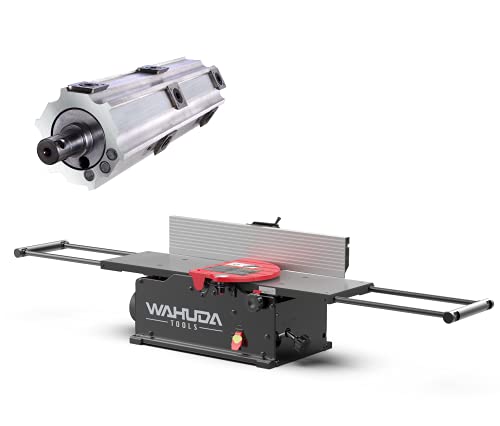
2. Wahuda Tools 8-Inch Benchtop Jointer, Spiral Cutterhead
Flattening and squaring wider boards can be a challenge with standard jointers, especially when working on furniture or cabinetry projects. An 8-inch jointer offers more flexibility without requiring a full-size floor unit.
The Wahuda Tools 8-Inch Benchtop Jointer is designed for users who need to handle a range of board widths and want the benefits of a spiral cutterhead. It's a great fit for intermediate woodworkers or small shop owners who value versatility and smooth results.
- 8-Inch Capacity: Accommodates wider boards for more project flexibility
- Spiral Cutterhead with 4-Sided Carbide Inserts: Delivers smoother, quieter cuts and easy blade replacement
- Expandable Cast Iron Tables: Provides stability for longer workpieces and adjustable fence for angled cuts
This model offers more working space and smoother operation than compact jointers, but it does require a bit more bench space and investment.
- Handles wider boards
- Spiral cutterhead reduces tear-out
- Stable cast iron tables
- Easy blade changes
- Adjustable fence
- Larger footprint
- Higher price point
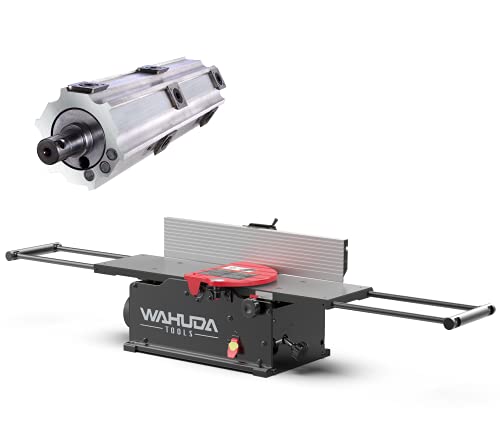
3. Wahuda Tools 10-Inch Benchtop Jointer, Spiral Cutterhead
Working with oversized or live-edge boards often requires a jointer with extra width. Standard benchtop models can fall short, making a 10-inch jointer a valuable upgrade for ambitious projects.
The Wahuda Tools 10-Inch Benchtop Jointer is ideal for advanced woodworkers and small professional shops tackling larger or irregular stock. Its spiral cutterhead and robust design ensure smooth, accurate results on demanding materials.
- 10-Inch Jointing Capacity: Suitable for wide boards and specialty projects
- Spiral Cutterhead with Carbide Inserts: Provides clean, quiet cuts and easy maintenance
- Expandable Cast Iron Tables: Enhances stability and supports longer boards
Compared to smaller jointers, this model prioritizes capacity and stability. The tradeoff is a larger size and higher cost, making it best for those who truly need the extra width.
- Wide 10-inch capacity
- Spiral cutterhead
- Stable for large pieces
- Durable cast iron build
- Versatile fence adjustment
- Bulky for small shops
- Premium price
4. VEVOR 8-Inch Spiral Benchtop Jointer, 2 HP, 18-Blade

Achieving a glass-smooth finish on hardwoods and figured woods can be difficult with traditional cutterheads. Spiral cutterheads with multiple blades are designed to minimize tear-out and reduce sanding time.
The VEVOR 8-Inch Spiral Benchtop Jointer is a strong option for woodworkers who prioritize surface quality and want a jointer that can handle medium to large boards. It's especially well-suited for those working with challenging grain patterns.
- 18-Blade Spiral Cutterhead: Delivers exceptionally smooth surfaces and reduces blade maintenance
- 2 HP Motor at 8,500 RPM: Powers through tough woods with consistent results
- Extendable 8 x 36.2 Inch Worktable: Supports larger boards for greater project flexibility
Compared to straight-blade jointers, this model focuses on finish quality and workpiece support. The main tradeoff is a slightly lower RPM, which may affect speed on very dense woods.
- Excellent surface finish
- Spiral cutterhead reduces tear-out
- Large extendable worktable
- Powerful motor
- Easy dust collection
- Lower RPM than some models
- Takes more bench space
5. Hoteche 10-Inch Benchtop Planer Jointer Combo, 13A

Limited workshop space and budget can make it hard to justify separate machines for jointing and planing. A combo unit offers both functions in a single footprint, maximizing versatility for small shops.
The Hoteche 10-Inch Benchtop Planer Jointer Combo is a practical solution for users who need both flattening and thicknessing capabilities. It's ideal for hobbyists or professionals who want to tackle a wide range of projects without crowding their workspace.
- 13A Motor with 9,000 RPM: Provides efficient material removal for both jointing and planing
- Generous Table Sizes: 37.3-inch jointer table and 10.6-inch planer table accommodate larger workpieces
- Stable Stand Included: Ensures safe, comfortable operation during extended sessions
Compared to single-function jointers, this combo unit prioritizes versatility and workspace efficiency. The tradeoff is that it may not match the specialized performance of dedicated machines in each role.
- Jointer and planer in one
- Large table surfaces
- Stable stand included
- Wide 10-inch capacity
- Consistent feed speed
- Bulkier than benchtop jointers
- Specialized tasks may require upgrades
6. VEVOR 6-Inch Spiral Benchtop Jointer, 2 HP, 12-Blade
Noise and maintenance can be concerns in shared or home workshops, especially when working for extended periods. Spiral cutterheads are known for quieter operation and reduced blade wear compared to straight-blade designs.
The VEVOR 6-Inch Spiral Benchtop Jointer is a good fit for users who want a compact, easy-to-store jointer with the added benefits of a spiral cutterhead. It's best for hobbyists or small shop owners prioritizing comfort and low upkeep.
- 12-Blade Spiral Cutterhead: Offers smoother, quieter cuts and longer blade life
- 2 HP Motor at 12,000 RPM: Handles a variety of wood types efficiently
- Compact 6 x 23 Inch Size: Fits well in tight spaces and is easy to move
Compared to straight-blade jointers, this model emphasizes reduced noise and maintenance. The tradeoff is a smaller work surface, which may not suit larger projects.
- Quieter spiral cutterhead
- Compact and portable
- Low maintenance
- Consistent cutting performance
- Easy dust port connection
- Limited to smaller boards
- No table extensions
7. WOODSTARTER 6-Inch Benchtop Jointer, 15 Amp, HSS Blades

For beginners or DIYers, heavy tools can be intimidating and difficult to move. A lightweight jointer makes setup and storage much easier, especially in multi-use spaces or for occasional projects.
The WOODSTARTER 6-Inch Benchtop Jointer is designed for those new to woodworking or with limited space. Its user-friendly features and manageable weight make it a practical choice for home workshops and quick jobs.
- 15 Amp Motor at 12,000 RPM: Delivers reliable power for most hardwoods and softwoods
- Lightweight at 21 lbs: Easy to transport and store, ideal for small shops
- Dual HSS Blades: Provide sharp, burr-free cuts for smooth surfaces
Compared to heavier, feature-rich jointers, this model prioritizes portability and simplicity. The main tradeoff is less stability and fewer advanced features for demanding tasks.
- Very lightweight
- Beginner-friendly setup
- Good for small projects
- Adjustable fence
- Sharp HSS blades
- Less stable for large boards
- Basic feature set
8. Wahuda Tools 6-Inch Benchtop Jointer, Spiral Cutterhead

Achieving smooth, flat edges in a small shop often means choosing between size and performance. Compact jointers with spiral cutterheads offer a balance of portability and surface quality for everyday woodworking.
The Wahuda Tools 6-Inch Benchtop Jointer is a solid pick for those who want the benefits of a spiral cutterhead in a manageable size. It's a good match for hobbyists or small shop owners handling routine jointing tasks.
- Spiral Cutterhead with Carbide Inserts: Delivers clean, quiet cuts and easy blade changes
- 6-Inch Capacity: Suitable for most standard boards and small projects
- Adjustable Cast Iron Table: Provides stability and precise control for accurate results
Compared to larger or straight-blade jointers, this model focuses on compactness and finish quality. The tradeoff is a smaller work surface and no extension rods for longer boards.
- Compact spiral cutterhead design
- Stable cast iron table
- Easy blade replacement
- Quiet operation
- Good for routine tasks
- No table extensions
- Limited to smaller boards
9. Fulton Safety Table Saw Push Blocks, 2-Pack

Safety is a top concern when working with jointers and table saws, as hands are often close to moving blades. Push blocks are essential for maintaining control and keeping fingers safely away from cutting surfaces.
The Fulton Safety Table Saw Push Blocks are a practical addition for anyone using jointers, planers, or table saws. Their non-slip grip and high-visibility design make them especially useful for both beginners and experienced woodworkers.
- Non-Slip Rubber Sole: Provides secure grip for controlled feeding of stock
- Ergonomic Handle: Enhances comfort and reduces hand fatigue during repetitive tasks
- Bright Safety Orange Color: Improves visibility and hand placement awareness
Compared to using improvised push sticks, these blocks offer better control and safety. The tradeoff is that they are an accessory, not a jointer, and must be used alongside your main tool.
- Improves workshop safety
- Non-slip grip
- Ergonomic handle
- Bright, visible color
- Durable construction
- Accessory only, not a jointer
- Limited to stock control tasks
9. Fulton Safety Table Saw Push Blocks, 2-Pack
Safety is a top concern when working with jointers and table saws, as hands are often close to moving blades. Push blocks are essential for maintaining control and keeping fingers safely away from cutting surfaces.
The Fulton Safety Table Saw Push Blocks are a practical addition for anyone using jointers, planers, or table saws. Their non-slip grip and high-visibility design make them especially useful for both beginners and experienced woodworkers.
- Non-Slip Rubber Sole: Provides secure grip for controlled feeding of stock
- Ergonomic Handle: Enhances comfort and reduces hand fatigue during repetitive tasks
- Bright Safety Orange Color: Improves visibility and hand placement awareness
Compared to using improvised push sticks, these blocks offer better control and safety. The tradeoff is that they are an accessory, not a jointer, and must be used alongside your main tool.
- Improves workshop safety
- Non-slip grip
- Ergonomic handle
- Bright, visible color
- Durable construction
- Accessory only, not a jointer
- Limited to stock control tasks
Buying Guide: How to Choose the Best Jointers for Woodworking
Jointers are technical woodworking tools designed to flatten, square, and smooth the edges and faces of boards. Choosing the right jointer involves balancing workspace constraints, board size requirements, and the type of finish you want. Many buyers are surprised by the differences between cutterhead styles, machine capacities, and the real impact of combo units versus dedicated jointers.
- Benchtop Jointers: Compact, portable, and ideal for small workshops or hobbyists with limited space
- Planer-Jointer Combo Units: Offer both jointing and thickness planing in one machine, saving space and money for multi-purpose users
- Spiral vs. Straight Cutterheads: Spiral cutterheads provide smoother finishes and quieter operation, while straight blades are more affordable but may require more maintenance
- Board Width Capacity: 6-inch, 8-inch, and 10-inch models determine the maximum size of boards you can joint in a single pass
- Motor Power and RPM: Higher horsepower and RPMs allow for smoother, more efficient cutting, especially in hardwoods
- Table Size and Extensions: Larger tables and extension arms support longer boards and improve stability
- Adjustment Features: Clear depth scales and adjustable fences make setup and repeatability easier, especially for beginners
- Safety Accessories: Push blocks and ergonomic handles are essential for safe operation and stock control
- Common Misunderstandings: Many assume bigger is always better, but overbuying can waste space and budget; spiral cutterheads are not always necessary for basic tasks
Choosing Between Benchtop and Combo Units
Buyers must decide whether a dedicated jointer or a planer-jointer combo best fits their needs. Combo units save space and offer dual functionality, but may not match the specialized performance of standalone machines. Benchtop jointers are easier to move and store, making them ideal for smaller shops or occasional use.
- Benchtop jointers are best for routine edge jointing and flattening in compact spaces
- Combo units are suited for users who need both jointing and planing but have limited room or budget
Cutterhead Types: Spiral vs. Straight Blades
Cutterhead design has a major impact on finish quality and maintenance. Spiral cutterheads, with multiple small inserts, produce smoother surfaces and run quieter, but cost more upfront. Straight blades are simpler and less expensive, but may require more frequent sharpening and can leave more tear-out on tricky grain.
- Spiral cutterheads: Smoother finish, quieter, lower maintenance
- Straight blades: Lower cost, easier to replace, may need more sanding
Matching Capacity and Table Size to Your Projects
The width and length of your typical boards should guide your jointer choice. Wider models (8" or 10") handle large or live-edge boards, while 6-inch units are sufficient for most standard projects. Table extensions or larger worktables help with stability, especially for longer boards.
- Wider jointers: More versatile, but take up more space
- Larger tables: Better for supporting long or heavy stock
Adjustment Features and Ease of Use
Precise table and fence adjustments are essential for consistent results, especially for beginners. Look for models with clear depth scales, easy-to-use knobs, and adjustable fences for bevel cuts. These features reduce setup time and improve repeatability.
Safety and Accessories
Using push blocks or similar accessories is critical for safe operation. They help keep hands away from blades and improve control, especially when working with small or narrow pieces. High-visibility and ergonomic designs add an extra layer of safety and comfort.
Final Buying Advice
Selecting the right jointer comes down to matching the tool to your workspace, project size, and finish expectations. Avoid the temptation to buy the largest or most feature-rich model if your needs are basic.
- Assess your typical board size and choose capacity accordingly
- Consider spiral cutterheads for smoother finishes and less maintenance
- Combo units are great for maximizing space, but may not excel at every task
- Prioritize safety accessories, especially if you're new to jointers
- Don't overbuy—choose a model that fits your real needs and space
FAQ For Jointers For Woodworking
1. What size jointer do I need for most woodworking projects?
2. Is a spiral cutterhead worth the extra cost?
3. Should I buy a jointer-planer combo or separate machines?
4. How important is motor power in a benchtop jointer?
5. Do I need push blocks for jointer safety?
6. How much space do I need for a benchtop jointer?
Related Posts
- Best Heavy Duty Dolly: Top 8 Picks
- Best Smartlock For Airbnb
- Best Taser For Women S Protection
- Best Budget Multi Process Welder
- Best Filler For 3d Prints
- Best Caulk For Toilet Base: Top 10 Picks
- Best Finish For Outdoor Wood Table
- Best Glue To Bond Metal: Top 8 Picks
- Best Superglue For Plastic: Top 6 Picks
- Top 10 Best Tactical Flashlight For Self Defense
- Best Battery Operated Closet Light: Top 10 Picks
- Best Construction Work Gloves
- Top 9 Best Height For Work Bench
- Best Tub Shower Conversion Costs Options Newark Oh: Top 9 Picks
- Best Sandpaper For Paint Removal: Top 10 Picks
- Top 7 Best Adhesive For Pvc
- Best Single Mode Flashlight
- Best Ventless Garage Heater
- Best Heat Pump Resistance Heating Which Is More Efficient Your: Top 6 Picks
- Top 6 Best Glue For Foam Insulation Board