
Choosing the right table saw blade can make or break your woodworking projects. Many woodworkers struggle with rough cuts, splintered edges, or blades that wear out too quickly, leading to frustration and wasted material.
This guide highlights the best table saw blades for woodworking, comparing their strengths in finish quality, versatility, and value. Whether you need a blade for fine finishing, general cuts, or multi-purpose use, you’ll find clear recommendations to help you select the right blade for your saw and your projects.


Our Top 9 Best Table Saw Blades For Woodworking Picks
Whether you’re buying your first Table Saw Blades For Woodworking or replacing an old one, we compared trusted options to help you make an informed choice.
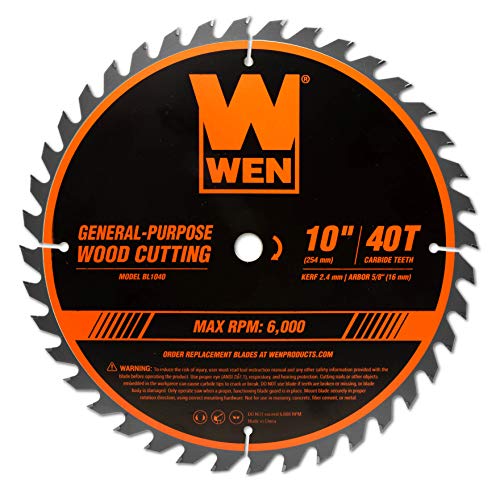
1. WEN 10-Inch 40-Tooth Carbide Saw Blade
General-purpose wood cutting often calls for a balance between clean edges and cutting speed. A 40-tooth carbide blade is a staple for anyone who needs reliable results across a range of wood types and thicknesses.
The WEN 10-Inch 40-Tooth Carbide Saw Blade is a dependable option for both hobbyists and professionals who want a blade that can handle most ripping and crosscutting needs. Its ultra-thin kerf ensures efficient, smooth cuts with minimal waste.
- 40 carbide-tipped teeth: Provides a good balance of speed and finish quality for various woods
- Ultra-thin 1/10-inch kerf: Delivers clean, efficient cuts with less material loss
- High RPM rating: Compatible with most 10-inch miter, jobsite, and table saws
Compared to specialized ripping or crosscut blades, this model prioritizes versatility and clean results. The tradeoff is that it may not match the speed of lower-tooth ripping blades for heavy stock.
- Clean, efficient cuts
- Versatile for many saws
- Good for hard and softwoods
- Thin kerf minimizes waste
- Reliable carbide tips
- Not as fast for thick rips
- May require slower feed
2. Luckyway 10-Inch 80T Saw Blade 2-Pack
Achieving smooth, splinter-free edges can be a challenge, especially when working with plywood, laminate, or moulding. Fine-finish blades are essential for woodworkers who want professional results without excessive sanding.
This Luckyway 2-pack offers excellent value for those focused on fine finishing. With 80 tungsten carbide-tipped teeth per blade, it delivers ultra-smooth cuts on a variety of materials, making it ideal for cabinetry, trim, and detail work. The inclusion of two blades extends value and convenience for frequent users.
- 80-tooth, carbide-tipped blades: Designed for ultra-fine, clean finishes on wood and composites
- Ultra-thin 0.1" (2.5mm) kerf: Minimizes material waste and reduces tear-out
- 2-pack set: Provides backup or extended use for demanding projects
Compared to general-purpose blades, this set prioritizes finish quality and value. The main tradeoff is a slower feed rate on thicker stock, but the smooth results are worth it for finishing tasks.
- Excellent for fine finish cuts
- Works on plywood and laminate
- Includes two blades
- Ultra-thin kerf
- Fits most saws
- Slower on thick hardwood
- Not for rough cuts
3. Kendo 10-Inch 40T & 60T Saw Blade Set

Switching between rough and smooth cuts often means changing blades, which can slow down workflow. Combo sets solve this by offering different tooth counts for various tasks in one package.
The Kendo set includes both 40T and 60T blades, giving users flexibility for both general and finer cuts. Its ATB tooth design helps reduce splintering, making it a practical choice for those who want to tackle a range of woodworking projects without buying multiple single-purpose blades.
- Includes 40T and 60T blades: Covers both general and fine cutting needs
- ATB (Alternating Top Bevel) tooth design: Delivers smoother cuts with less splintering
- Durable carbide construction: Withstands frequent use and resists bending
Compared to single-blade options, this set prioritizes versatility and convenience. The tradeoff is that neither blade is ultra-specialized, but together they cover most common woodworking needs.
- Two blade options in one set
- Reduces splintering
- Durable carbide teeth
- Covers multiple wood types
- Not specialized for ultra-fine cuts
- No ultra-high tooth count blade
4. Diablo 10-Inch 60T Fine Finish Blade

Achieving fast, clean crosscuts in plywood and hardwood is essential for efficient project workflows. Standard blades can leave rough edges or require extra sanding.
The Diablo 10-Inch 60T Fine Finish Blade is engineered for users who need both speed and a smooth finish. Its high tooth count and specialized coating make it ideal for fine woodworking, cabinetry, and trim work where appearance matters.
- Hi-ATB tooth geometry delivers ultra-smooth, precise cuts with minimal blowout
- Perma-SHIELD coating resists heat, gumming, and corrosion for consistent results
- Thin kerf allows for quick, clean cuts with less material waste
Compared to general-purpose blades, this Diablo model emphasizes finish quality and cutting speed. The tradeoff is that it’s best suited for crosscuts rather than heavy ripping or framing.
- Clean crosscuts in plywood
- Reduced sanding needed
- Heat-resistant coating
- Thin kerf for fast cuts
- Durable carbide teeth
- Not for ripping lumber
- Higher price point
5. ANGELSWORD 10-Inch 60T Saw Blade 2-Pack

Woodworkers often need to maintain a high level of finish across multiple projects, and frequent blade changes can disrupt workflow. A matched set of fine-finish blades helps ensure consistency and reduces downtime.
This ANGELSWORD 2-pack provides two identical 60-tooth blades, ideal for users who value smooth, clean cuts on hardwoods, softwoods, and sheet goods. The tungsten carbide teeth and thin kerf design support extended use and reliable results.
- Two 60-tooth carbide blades: Delivers consistent fine-finish cuts for ongoing projects
- 0.098" thin kerf: Supports smooth operation and reduces material waste
- Compatible with major saw brands: Easy to install and swap as needed
Compared to single-blade options, this set offers better value and less downtime for frequent users. The tradeoff is less versatility for rough or fast cuts.
- Two fine-finish blades included
- Long-lasting carbide teeth
- Smooth, clean cuts
- Works with popular saw brands
- Not for heavy-duty ripping
- No coarse blade option
6. Janchi 10-Inch 3-Pack Saw Blade Combo

Many woodworkers need to tackle a variety of cuts, from rough ripping to ultra-fine finishing, without buying multiple single blades. A combo pack with different tooth counts solves this problem and streamlines the workflow.
The Janchi 3-pack includes 32T, 60T, and 80T blades, covering general, fine, and ultra-fine cutting tasks. This makes it a practical choice for DIYers, homeowners, and professionals who want flexibility and value in one purchase.
- Three blade set (32T, 60T, 80T): Handles rough, fine, and ultra-fine cuts
- Thin 0.095" kerf: Delivers clean, accurate cuts with less waste
- Fully hardened steel bodies: Enhance durability and stability for demanding projects
Compared to single-blade or two-blade sets, this combo prioritizes versatility and convenience. The main tradeoff is that none of the blades are highly specialized, but together they suit most woodworking needs.
- Three blades for different cuts
- Good for DIY and pro use
- Durable construction
- Smooth, accurate cuts
- No ultra-high tooth count
- Not specialized for one task
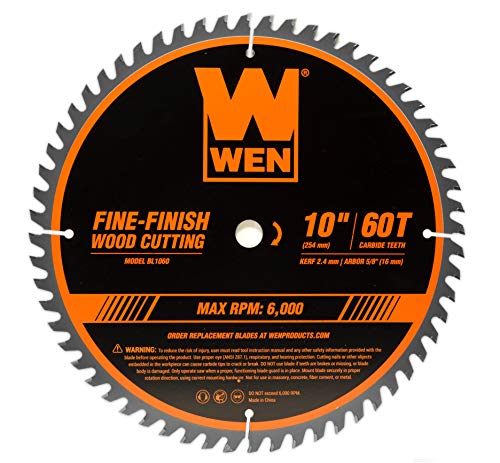
7. WEN 10-Inch 60-Tooth Fine-Finish Blade
Finding a blade that balances clean finishing with everyday usability can be difficult, especially for those who want to avoid frequent blade changes. A fine-finish blade that also handles general cuts is a practical solution for most home workshops.
This WEN 60T blade is designed for smooth, efficient cuts on both hard and softwoods, making it a reliable choice for users who want one blade for most tasks. Its ultra-thin kerf and carbide-tipped teeth support clean results and long-term durability.
- 60 carbide-tipped teeth: Provides fine-finish results on a range of woods
- Ultra-thin 1/10-inch kerf: Reduces waste and supports efficient cutting
- Rated up to 6000 RPM: Compatible with most 10-inch saws
Compared to higher tooth count blades, this model offers a strong balance of finish quality and speed. The tradeoff is that it may not match the smoothness of ultra-fine blades on delicate materials.
- Good for fine and general cuts
- Efficient, clean operation
- Durable carbide teeth
- Fits most saws
- Not for ultra-fine finishing
- Single blade only
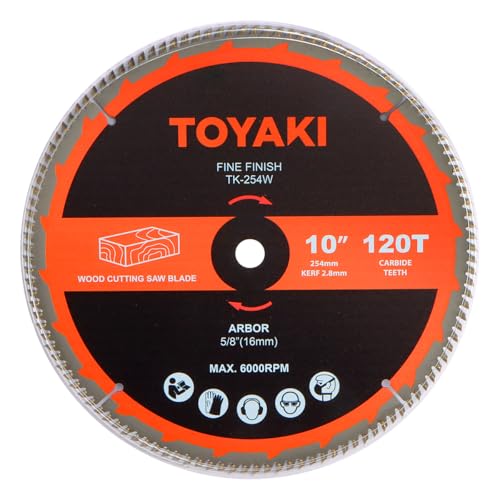
8. TOYAKI 10-Inch 120-Tooth Fine-Finish Blade
When the highest level of finish is required—such as for cabinetry, veneered panels, or trim—standard blades may leave visible marks or require extra sanding. Ultra-high tooth count blades are designed to solve this by delivering exceptionally smooth cuts.
The TOYAKI 120T blade is tailored for users who demand the finest possible finish on wood and soft materials. Its engineered tooth pattern and high-grade steel construction help reduce vibration and ensure long-lasting performance for precision work.
- 120-tooth fine-finish blade: Delivers ultra-smooth, clean cuts for delicate projects
- Engineered teeth pattern: Minimizes vibration and improves cut accuracy
- Standard 16mm arbor: Compatible with most common saws for easy installation
Compared to lower tooth count blades, this model prioritizes finish quality above all else. The tradeoff is slower cutting speed and less versatility for rough work.
- Ultra-fine finish quality
- Reduces vibration
- Durable steel construction
- Easy to install
- Slower on thick stock
- Not for rough cuts
9. WEN 10-Inch 32T & 60T Saw Blade Set

For those setting up a new workshop or tackling a variety of basic woodworking tasks, having both a general and a fine-finish blade is a practical starting point. Basic sets help users avoid the hassle of mismatched or incompatible blades.
This WEN set includes a 32T blade for rougher cuts and a 60T blade for finer finishing, making it a good fit for beginners or anyone who needs to cover essential cutting needs. Both blades feature an ultra-thin kerf for efficient, clean operation.
- Two-blade set (32T and 60T): Covers both rough and fine cuts for basic projects
- Ultra-thin 1/10-inch kerf: Supports clean, efficient cutting
- Rated up to 6000 RPM: Compatible with most 10-inch saws
Compared to larger combo packs, this set prioritizes simplicity and affordability. The tradeoff is fewer options for highly specialized tasks.
- Includes both rough and fine blades
- Good for new workshops
- Clean, efficient cutting
- Fits most saws
- Limited to two tooth counts
- Not for advanced finishing
Buying Guide: How to Choose the Best Table Saw Blade for Woodworking
Selecting the right table saw blade is a technical but essential decision for any woodworker. The wrong blade can lead to rough edges, excessive waste, or even damage to your material and saw. Buyers often underestimate the impact of tooth count, kerf thickness, and blade material on the quality and efficiency of their work.
- Blade Type Matters: Options include general-purpose, fine-finish, and combo packs with different tooth counts for various tasks
- Tooth Count and Design: Higher tooth counts (60T, 80T, 120T) deliver smoother finishes, while lower counts (32T, 40T) are better for rough or fast cuts
- Kerf Thickness: Thinner kerfs reduce waste and require less power, but may be less durable for heavy-duty work
- Material and Coating: Carbide-tipped teeth and anti-corrosion coatings increase durability and cut quality
- Saw Compatibility: Not all blades fit every saw—check arbor size and RPM ratings before buying
- Combo Sets vs. Single Blades: Combo packs offer flexibility, but single blades may be more specialized for a specific task
- Common Misunderstandings: More teeth do not always mean better results—match blade type to your project needs
Choosing Between General-Purpose and Fine-Finish Blades
The main decision for most buyers is whether to prioritize versatility or the smoothest possible finish. General-purpose blades (32T–40T) are great for rough work and everyday cuts, while fine-finish blades (60T–120T) excel at producing clean, splinter-free edges for cabinetry and trim.
- General-purpose blades: Best for ripping and fast cuts on framing lumber or sheet goods
- Fine-finish blades: Ideal for crosscuts, plywood, laminate, and detailed work where appearance matters
Combo Packs vs. Single Blades
Combo packs with multiple tooth counts offer flexibility for workshops handling a variety of projects. They allow you to switch between rough and fine cuts without buying separate blades, making them a practical choice for DIYers and professionals alike.
- Combo packs: Provide both rough and fine cutting options in one purchase
- Single blades: Often more specialized, but may require additional purchases for different tasks
Understanding Kerf Thickness and Material
Kerf thickness affects both the quality of the cut and the amount of material lost. Ultra-thin kerfs are efficient and produce cleaner cuts, but may not hold up as well for heavy-duty or repeated use. Carbide-tipped teeth and anti-corrosion coatings extend blade life and improve performance.
- Thin kerf: Less waste, smoother cuts, but may be less robust for tough jobs
- Carbide-tipped teeth: Longer-lasting and better for repeated use
Matching Blade to Saw and Project
Always check that the blade matches your saw's arbor size and RPM rating. Using an incompatible blade can reduce performance or even cause safety issues. Consider the types of wood and projects you tackle most often to choose the right balance of tooth count and blade design.
Final Buying Advice
Choosing the best table saw blade comes down to matching your most common projects with the right blade type and features. Avoid overbuying specialized blades if you mostly do general work, but don't settle for a rough-cut blade if finish quality is your priority.
- Match tooth count to your typical cuts
- Check saw compatibility before purchasing
- Consider combo packs for flexibility
- Prioritize carbide-tipped blades for durability
- Don't assume more teeth always means better results—choose based on your real needs
FAQ For Table Saw Blades For Woodworking
1. What tooth count should I choose for woodworking?
2. Are thin kerf blades better for all projects?
3. Can I use these blades on any 10-inch saw?
4. What is the advantage of a combo pack?
5. How do I know when to replace my saw blade?
6. Does a higher tooth count always mean a better cut?
Related Posts
- Top 6 Best Band Saw For Resawing
- Best Table Saw Miter Gauge: Top 8 Picks
- Best Cordless Portable Air Compressor
- Top 5 Best Corded Jigsaw For Woodworking
- Best Hammers For Electricians: Top 8 Picks
- Best Adjustable Saw Horses
- Best Flashlight For Electricians: Top 10 Picks
- Best 20 Volt Drill: Top 8 Picks
- Top 7 Best Clamp Multimeter For Electricians
- Best Cordless Power Tool System
- Best Lineman Pliers For Electricians
- Best Chainsaw Bar Oil
- Top 9 Best Drill For Ice Fishing
- Top 8 Best Variable Speed Drill Press
- Top 10 Best Drill Press Table
- Best Impact Gun For Lug Nuts: Top 10 Picks
- Best Multi Tool Oscillating: Top 8 Picks
- Top 9 Best Budget Tile Saw
- Best Saw For Firewood: Top 9 Picks
- Best Hole Saw For Plastic: Top 5 Picks